Ancient Egyptians believed that upon death they would be asked two questions and their answers would determine whether they could continue their journey in the afterlife.  
The first question was, "Did you bring joy?"  
The second was, "Did you find joy?"

Showing posts with label Santiniketan. Show all posts

Monday, May 2, 2011

Photo Finish

Jet lag owns me at the moment.  It can take me down anytime it pleases and keep me asleep for as little or as long as it likes.  My soul and body are finding it hard to be completely in Seattle, though they are no longer in India, as well.  I seem to exist in two realms, and if I had to name those realms they would simply be "Awake" and "Asleep."

I've been forced to do stuff today.  Responsible stuff like dealing with the bank and getting my car and it's dead engine towed.  The last two boxes that I shipped from India arrived and I unpacked them and felt like, "This is it.  I'm all here.  All arrived.  My adventure is over.  Tied up. Concluded.  The End."  I left everything out on tables for the day, though, so that I can process longer, leave the door ajar till I'm ready to close it for good and all.

I've also been uploading all my photos....or at least a grand amount of them.  There are still some areas that might be flushed out a little more when I have the energy to sort through the thousands of pictures I took.  As it is, I'm afraid, should you choose to peruse, you might also find yourself hunting a bit for the gems.  I don't have it in me to go through and label who is who and all, just now.  But if you've been following along, I suspect it might be a little like a scavenger hunt and you might just be able to put names to faces and illustrations to events.

So, I'm just gonna make a list of links here to galleries.  I hope you enjoy them.  I don't know if this is the last chapter, or just the last one for a few days, a week, what have you.  But I am giving myself permission to step away and linger in the moments of reconnection here in Seattle.

Once again, your company has been invaluable.  Each comment and private message sent has been cherished and made each step of this journey more rich.  So, thank you, thank you, thank you!

Now...The pictures:

Mumbai

Fort Cochin

Keralan Hill Stations

Lucky and Lakshmi

The Backwaters

Santiniketan

Hindu Village

Holi

Darjeeling

Varanasi

Jaipur and Agra (The Taj Mahal)

Monday, March 28, 2011

Soul Food

Somedays it's simply hard to get out of a funk.  Despite the fact that today was cool, thanks to the extended thunderstorms that swept through the area late into last night, I couldn't shake a certain sadness for the life of me.

Actually, I think it was the weather that set me off.

I know, I know....geez, what makes this girl happy?  She gets edgy and cranky in the hot weather, she is sad in cool weather.....

Today was perfect weather.  It was Seattle in August weather.  It was gentle and just the right amount of warm.  It made me slightly homesick.  But mostly, it made me feel the conflict I have about leaving Santiniketan (and eventually India) even more acutely.

Traveling is soul food for me.  I get that.  I learn the most and feel most alive when I am out in the wide world soaking in new adventures.  But, I am also a nester.  I need a home-base, a place to to return to.  So, even though I crave travel and getting out and exploring the planet and different cultures, I've always known and felt drawn to eventually return to my cozy spot in Seattle.

This trip is different.  For the first time I don't know what it is that I am going home to.

Wait.  Wait.  Don't get me wrong....my house, my friends, my family, ALL are just as rich in soul nutrients as traveling and I miss so many incredible people that I cannot wait to see in just over a month.

It's just that, today anyway, the reality that at 41 I don't have a family of my own, a partner waiting for me, a career that is sitting patiently but anxiously counting the days till I come home, has really hit me in the gut.

Here, in India, in this town I'd never even heard of 6 weeks ago, in a part of the country I'd vowed not to go near, I can see a need, a purpose for being here.  There are people, like Chandana, that I could work with to help other people live better, healthier lives.

But could I really leave the safety and security of my beautiful house and my network of friends and family so far away?  Could I abandon the opportunity to act in Seattle on a more regular basis with a community that I respect and look forward to playing with whenever the chances arrive?  I have, after all, spent almost 15 years paving that particular road.  Could I handle the upheaval that moving to the other side of the globe would entail?  Would I want to, even if I could?

These questions started to consume me today, so I did the only sensible thing: I took a nap.  With the sense of an impending spiral into depression still looming when I awoke, I decided to go for a bike ride.  Once on the bike, I made up my mind to cross the safety barrier of the Santiniketan wall  and to go into the village just on the other side.

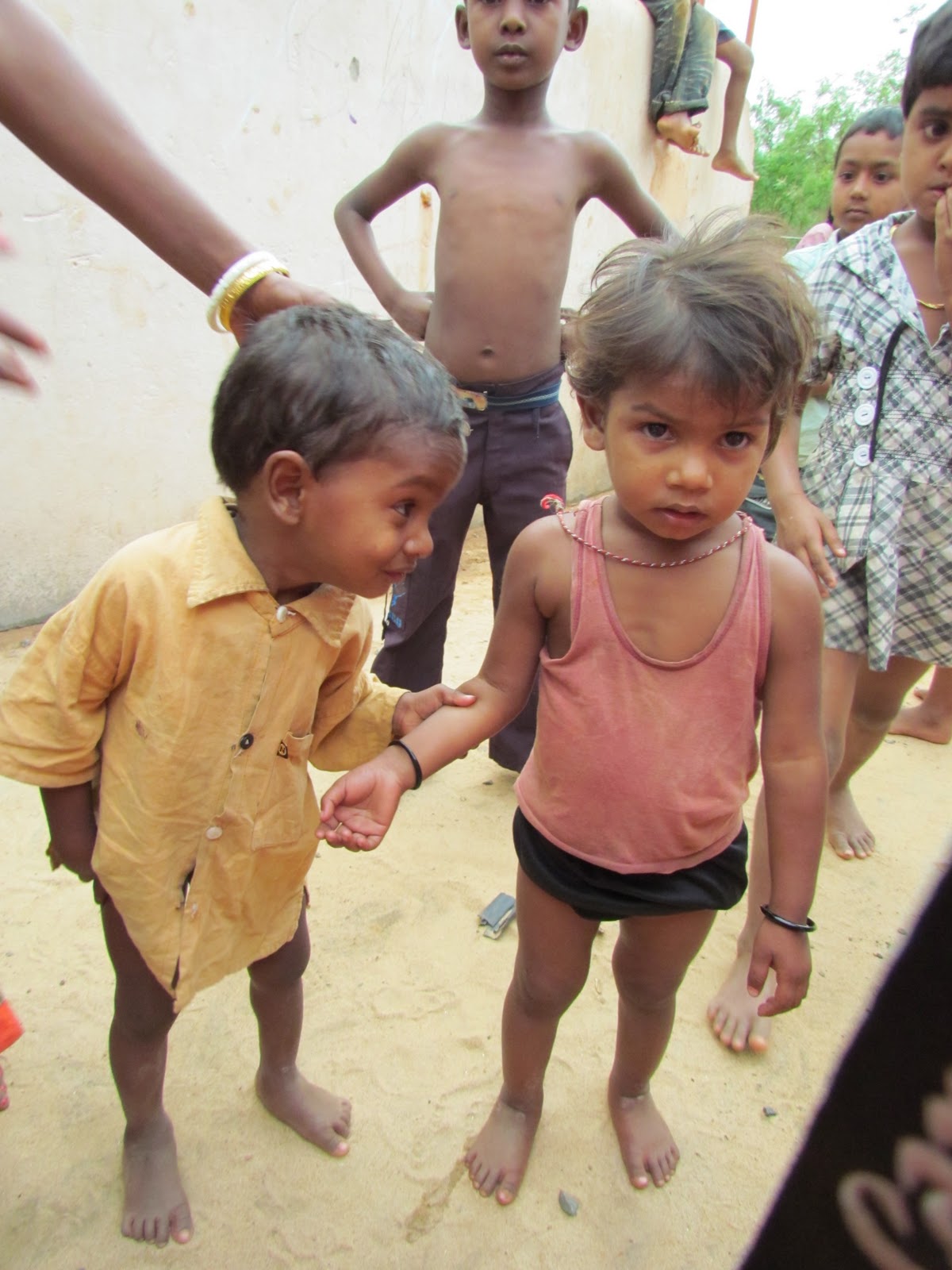
Here I was almost consumed by something else entirely: joy.  Everyone wanted to say hello.  I even ran into a few students of Antaranga School who live over there.  I pulled the camera out and was virtually mobbed.


People started coming out of the woodwork and fairly demanding that I take their pictures, though you'd think I'd forced them to stand still and pose based on the expression they offered to the camera.


Parents insisted that I take their children's photos.  Things were happening so fast and I was surrounded by so many people, hands everywhere...on me...on my camera...in and out of the frame...that looking at the pictures I am struck by how many other interesting things ALMOST got captured on the camera, like the kid with his hands on his hips in this one.


I wish I knew the Bengali word for "goofball."


And, below, is my all time favorite kid portrait, ever.  I take no credit.  Like I said, things were happing so fast, people were in and out of my field of vision in a flash.  This was completely the luck of the draw.


It was also pure chance that the last house on the village road turned out to belong to one of my favorite kids from the evening school at Antaranga and he was home and his family invited me onto the porch for tea. They gave me the seat of honor, which is to say, they gave me the only chair and the extended family and friends from all around came and sat on a mat on the floor.  It was just sunset, so too dark to take pictures.  So, just imagine a very small space with 4 or 5 women with 6 or seven toddlers, the young man from the school, and in the only other chair that appeared out of nowhere, a woman who had to be 200 years old if she was a day.  Ok, she only looked it, but I wouldn't be surprised.

Just inside the door to their one room house I could see an elevated bed covered with clothes and below the bed a fresh crop of potatoes were being stored.  On the edge of the porch a woman lit a fire using dried leaves on the concrete floor and made tea which she thankfully got good and boiling before pouring it into cups.  I was offered the only serving with powdered milk and a large plate with more than my share of crackers.

Conversation was initially aimed in my direction.  Questions about wether I had children and if I was married came my way.  When they found out the answer to both inquiries was "No," they all gasped and decided that I would be a very good wife and mother.  A high compliment coming from that group.  Eventually, the women turned to village gossip or news and I was left to play with the kids, both human and goat, that ran around my feet.

At one point, my Antaranga student's grandmother, who was one of the most striking and elegant women I've ever seen with her long flowy grey hair and lithe limbs and natural ease in a sari, noticed my arm tattoos.  In fact, she was the second or third lady that day who had grabbed my arms and made pleased noises to find them tattooed.  It's a tribal custom here for the ladies to tattoo their forearms.  I think finding my arms to be tattooed helped me to be less foreign.

The tattoos are of identical design, the one on the left arm says, in french, "I am the gift", the one on the right says, again in french, "You are the gift."  I was struck by the admiration of the tattoos coming today of all days, because sitting on the porch of that tiny village hut, I no longer worried about my aimless feeling life, my singleness, my childlessness.  These women and children, this afternoon, was....IS.....ARE....the gift(s).

As much as having tattoos on my forearms is a crazy thing to do as an actress, I really love them, because even with the messages permanently written on my body, in plain sight, I forget them sometimes.  When I do, some angel leans over and grabs my arm and points and reminds me why they are there.

Sunday, March 27, 2011

A Palm Wrapped In A Plum


Tensions are rising here in India.  Storms are brewing.  Lightening is flashing and thunder is rolling.  The skies above Santiniketan let loose today, rain was followed by hail.  For several minutes the temperature plummeted and I got the tiniest taste of shivery winter, which was quickly followed by a spike in humidity and the moodiness of the skies rolled through the classroom I was teaching in; Chandana and I bickered and no one seemed to want to focus, least of all me.

This morning I went to look at a piece of land that is owned, in part, by a friend of Chandana's named Konika.  Out in the middle of nowhere, the large parcel is dotted with palm and mango trees.  While we surveyed, a very large monkey galloped across the plain and for a split moment I felt like I was on a savanna in Africa which, now that I've been in India so long, feels just that much more exotic.  Konika is a very slight woman who comes across as shy, but she can surprise a person with sudden bursts of quiet laughter and strong declarations about this or that.  We shared a rickshaw last night and she got in and embraced me full on to break the tension that comes from trying to share a teeny tiny seat with a total stranger.

Konkia lives in Kolkata and makes a living doing some kind of social work.  She also comes to Santinketan regularly to help Chandana and her crew develop new recipes for their line of organic food products.  She is a busy, single by choice, nearing middle age lady who longs to live on the land, farming, using solar power and building a model village for the next phase of planetary development.  Out on her land, Konika fairly shone.

When I came home, Nicole called from Bodhgaya where she is learning to meditate.  I don't know if she is sitting under Buddha's Tree of Enlightenment, but she could.  It's there.  It also sounds like she could use a little peace of mind.  She was sounding a little bitter about India.  After swimming with the dead cows in Varanasi, I think she is a little travel worn, tired, hating the constant adjusting that it takes to live day in and day out in a country that is so foreign, a place where even the beds can piss a person off.  I can sympathize with her there.  Beds are very hard here in India.  Though I find that it doesn't bother me so much anymore.

After the phone call, I came down with a splitting headache and had to go to sleep.  Maybe I was channeling Nicole's angst.  Maybe it was leaving the house at seven to go riding in a rickshaw, which is hard on a body.  I don't know.

Later still, I made a pile of stuff to send home.  I'm cleaning house of all the clothes I won't need for the next month, as well as a pile of gifts.  But it feels itchy and dumb and even slightly hateful in that 14 year-old, "I HATE THIS!" kind of way.  My room is looking less like I live here and more like I'm just staying here for a few more days.

As of two minutes ago, I am typing in the dark.  The electricity has gone out.  Hows that for a metaphor?  I feel I don't even need to elaborate on the correlation there....oh, ok....instead of feeling plugged into this place....I'm all out of juice....or something like that.

And, just like that, the lights come back on.  Ah, sweet rejuvenation.

Walking with Konika today I wondered if I was subtly being wooed to buy into her land.  Out of the original 9 investors, only a few are even slightly pro-active about building, and only one other person is truly gung-ho.  I walked with an open heart, inviting myself to really consider the option.

Tonight I find myself caught somewhere between Konika in her village of the future and Nicole feeling so far from the familiar comforts of home.  I could see myself living out on the land here in India.  I could see going to work everyday at Antaranga or the cyber cafe I've daydreamed with Chandana about starting; I can see my friends here being my friends for life.  I can also picture my friends and family and house back in Seattle and I wonder what kind of lunatic gives up all that sweet comfort for the heat and dust and madness of a place like India.


I suspect there's some kind of hybrid possibility.  I dont' know what to even picture when I say that.  It's not like India is right around the corner from Seattle.  But maybe there's a way to have it all....???  

I can't get these trees I saw today out of my mind.   They were out on Konika's land.  There was a plum tree wrapped around a coconut palm.  I can't get over the beauty of the two disparate earthly creatures, utterly entwined with each other.  Plums in my mind speak of warm, but moderate, climates.  They are delicate, feminine somehow.   They produce fruit that is sweet and juicy and fleshy.  Coconut palms scream HEAT and radiate masculinity and sturdiness and a real survivor mentality.  They make fruit that is hard, seemingly impenetrable, difficult to eat, but the water of a coconut has healing powers.

Somehow, that is the life I want, the life I imagine for myself, a coconut palm wrapped in a plum tree kind of a life.  Or maybe that's just me.  Maybe I am a plum tree wrapped around a coconut palm. 

Maybe both statements are true.


The lights just went out again, which seems like a sign.  No answers are coming tonight.  The storm has left it's mark and we are just going to have to sit in the dark and wait for the lights to come back on or the sun to rise....which ever comes first.

Friday, March 25, 2011

Simple Pleasures

Well, the rain did come yesterday.  Somewhere.  We only got a few drops in Santiniketan though, but the storm did its job without local precipitation and lowered the temperatures so dramatically that I was able to sit last night for several hours without turning on the fan.  Even today, it remained cool enough to take a nice nap and then a sunset bike ride.

I have been hard at work making a website for the homestay I'm living in and another for Ahimsa, the NGO that Chandana works for.  I've been teaching kids how to do stage slaps and getting other kids to write a book of poetry.  Finally, I've ironed out some of my remaining travel plans.  I'll go up to Darjeeling for a week on April 4th, where the air at the moment is a little too cool at 37 degrees F.  After that, I will come down from the mountains to the Ganges and the holy city of Varanasi.  I've still got two weeks at the end of my trip to pin down, but it  looks like I might be going to Jaipur in Rajasthan after all.

Shifting my focus, even in the planning stages, to leaving Santiniketan has left me feeling unfocused.  I've tried to write several blog posts on things like the kids at Antaranga or the women in the Chitra group who all have stories worthy of their own best-selling memoirs.  I am so much IN it here now, in the world of this little town, into a routine, nestled into my house and alone time when need be, socializing and checking in with Chandana about work and life and gossip when the mood strikes that I'm finding it nigh on impossible to step out long enough to write from here.

I've thought once or twice over the last few days that I could easily be back in Seattle I feel so acclimated, so used to being here.  But now, in buying train and plane tickets for the next legs of my Indian adventure, I am reminded that I am only a visitor to this little town on temporary leave from my "normal" life.

It is a temptation to start to disengage and pull away from my new friends so the actual parting will be less painful, but, so far, I've managed to curb that impulse.

But the emotions are getting a bit jammed up and, like I said, I haven't been able to write.  It seems like all my thoughts and feelings and stories are now crowded in a small room, such a confined space that I can't make out any individual thread clearly enough to untangle it and put it down in clear, bright words.  It's like if every story I want to write for you were a person, they would be packed like commuters on a Mumbai train, pinned against one another, packed like the proverbial sardines, immovable.

Maybe I have to imagine all those stories at a train stop and wonder which one would get off now and which ones are still waiting to get off further down the line.

Hmmm.... Ok.

What would the first stop be called?  Let's try "Simple Pleasures."

The image that steps out of the train first is of two little girls, each 13 but small for their age who go to the night school at Antaranga.


I don't know their names.  I should.  They have told me.  But Bengali names and I have a little bit of difficulty understanding each other.  Plus, I don't work with the night school kids more than a few evenings a week.  We have been making a book of poetry.  I sent the students out to observe their lives and then asked them to come in and write short pieces in Bengali about something that made them happy.  Actually, I asked them to write about something that affected them, moved them in some way, and they all chose to things that made them happy.  Then we translated the poems into English, after which they wrote the two versions of their poem side by side and illustrated them.  As several kids were absent after the revelry of Holi, this process has been drawn out and students have been finishing in stages.

Last night I waited for the last 4 kids to translate and illustrate, which left me pretty much hanging out with the other 15 kids while they did any homework from their day school, the government school, where class sizes of a 100 students or more make it impossible for anyone to get individual attention.   As I sat against the wall on the floor, one of the 13 year old girls nudged her way to sitting on my right side, the other girl scooted in to sit on my left.  The girl on the right plopped her English book on my lap and started reading from it.  It was a lesson in the Past Tense of verbs.  The girl on my left leaned in and started to read out loud with the girl on my right who was sitting now with her elbow resting on my leg.  As they continued to reach deep into their brains to put sound to what they were seeing on the type-written page, their little heads leaned in and the three of us were almost forehead to forehead to forehead.  I would correct them, if needed, and they would try again.  It was the simplest of teaching moments, and one of my favorite ever.

When they were tired of reading, the two girls took to trying on my rings and generally being goofy and trying to tickle me.  The boys who were half-way working on the other side of the room started posing and asking for me to take "one picture please."


From an adjacent classroom, a gal of 14 or 15 was basically playing peek-a-boo with me, going so far as to sometimes get up and run in to my room and then run back out.

One of the two older girls who was still illustrating her poem, paused to tell me all nine of her names, this included her English name, Anita, and her nickname, Honey.  I loved that this girl, who I must admit is one of my favorites, had the same nickname as my big sister.  The Indian Honey caught my eye right off when Eva was here doing her art workshop.  Honey is a girl just on the line of becoming a woman, with a serious maturity that hints at great sadness which makes me love her.  I sense that she is fighting to become herself in a place that doesn't make much room for girls to own their power and their independence.  I have tried, as best I can without making it obvious to everyone else that she is one of my favorites, to instill in her my belief that she is someone special.


It's really unfair to say that Honey is one of my favorites, because when my mind wanders over all the faces from the night school at Antaranga, I feel such love for each one.  It's a group full of character and light.  And last night, as I sat there on the dirty and dusty floor, mosquitoes buzzing, I couldn't imagine any place on earth that was more wonderful.

There are so many simple pleasures here in Santiniketan.

The way rickshaw drivers sit in their rickshaws waiting for customers never ceases to please me.  They do it in such a way that it feels like they arranged themselves deliberately in the most beautiful and artistic way possible.


The way ticky tiks, or geckos, are constantly flitting across the walls tickles me daily.  Once I learned that geckos were called ticky tiks in Bengali they became even more fun.

The absolutely brilliant nimbu panis that Munglie, the cook here, makes for me every day.  It's a special lime juice that is calibrated to be just the right amount of salty and sweet as to be thirst quenching and utterly delicious all at the same time.

Seeing Saris drying on the lawn, simply stretched out on the grass.  It's delightfully colorful and completely practical.

The fact that tiny little food shacks that still operate much as they must have 100 years ago can be entirely covered in chalk drawn murals such as this....


....makes me want to literally jump for joy.

I could go on and on.  As my days here dwindle, I'm going to have to be diligent about soaking all these pleasures in without holding onto them too tightly.  Maybe finding out what other stops my writing train needs to stop at to let some of these pent up stories out will help.

I'll think on that while I climb into my mosquito-net tented bed, another simple pleasure that affords me a moment everyday of indulging in the sense of adventure that comes from going to sleep in a place that requires a mosquito net to cover the bed.

Thursday, March 24, 2011

Rain Dance

The sky over Santiniketan has turned grey and a yellow heaviness has filled the yard outside my window.  One minute a slight breeze comes through, the next I feel the humidity spike and I start to sweat, then relief descends again.

Thunder has just begun to rumble and it seems almost certain now that a downpour is imminent.

This morning at Antaranga I made machines with my class three kids.  Using their imaginations and their bodies, this group of 7 year olds first made a bicycle, working out all the intricate parts that come together to make the whole.

Next, I took a leap and wondered if they could make a machine to make rain, blessed rain, rain that my heat soaked body craves with each additional degree on the thermometer.  I asked the students what parts we would need for such a contraption.   One girl cottoned onto the idea right away and raised her hand and volunteered to be the water.  Next, two girls decided to be the bowl that held the water,  this was followed by a gal who was the wood that made the fire that heated the water.  Of course,  vapor made by the heated water followed,  then two boys stood on a chair and started booming like thunder-clouds and, finally, the last two girls stood up and magically transformed into rain dancing on the ground.

I don't want to get ahead of myself here and I don't take any credit, but if it starts to rain today, then tomorrow I'm asking those genies at Antaranga to become a machine that makes cool breezes, and peace, and an anti-nuclear meltdown reactor, and vast green fields of rice and mustard seed and whatever else the villagers around here need to build robust and healthy lives, and, just for fun, a transporter so I can pop over and see my Mom and then get a margarita with all my friends in Seattle, then see my niece in NYC, then come back here and finish my trip.

The breezes are kicking up.

Lightening is striking.

Thunder is rolling.

What is going to happen?  What is going to happen?

Monday, March 21, 2011

Mope-aholics Anonymous

India is hot.

India has been hot since I arrived, don't misunderstand.  Compared to "my" moderate Seattle and to the parts of the globe that have been ravaged by winter over the last two months, India has kept warm and cozy, at least the parts I've been in.

But sometime in the last week the sun shifted in such a fashion that even the way its rays shine onto the ground have a different, more aggressive slant to them.  The afternoon air turns almost white with glare.  Now, it is more judicial to close the house up entirely around 1 o'clock to keep the fresh heat from making the old heat trapped in the house utterly unbearable.

Sweating is quickly becoming the natural order of things.  Chaffing follows.  Sitting still, if at all possible, ensues.

This is only the beginning.  India will continue to get hotter as the days tick by.  April, I'm told, will be unfathomably hot.  If it is, at the rate I'm going, I shall have to take 19 tiny showers a night just to stay cool enough to sleep.  I'm already up to three 30-second spritzes between 10 when I go to bed and 6 when I get up for the day.

My mood seems to be reflecting, in a distorted fun-house fashion, the change in temperature.  I am irritable, melancholy, quick to judge.  Perhaps this is because the heat is affecting my digestion and for the first time since I arrived in India  I've had a more than fleeting bout of travel related stomach ailments. Maybe it's because Martin has written to say that he has decided to "move on" despite the fact that I "have awakened feelings in" him.

It could just be that my time here in India is growing short.  I find that I am occasionally beset with fits of inner conflict about going back to my life in Seattle.  Certain moments, I simply cannot imagine it.  Other times, especially when people get to talking about the Indian government and the absolutely ass-backwards way that certain programs, health, education, and human services especially, are run, or not run as the case may be, I feel sure that I would go mad if I tried to make a life here.

One small example involves the process of adoption.  If an orphan can be adopted, which isn't always the case for some reason, it takes at least two years for a child to move from the chaotic orphanage to their new home despite the fact that they have been assigned to a couple that has been approved and is waiting to nurture and to love them, not to mention able to relieve the state of the burden of feeding and clothing the child.  I defy anyone to satisfactorily explain to me how this is a good or wise or logical or prudent or humane way to do things.

I told you I was grumpy.

I didn't even go to teach this morning.  My stomach, and my emotional barometer, felt too delicate.  Like the humidity in West Bengal which can rise from 30% to 70% at the drop of a hat or fall just as quickly, my constitution threatened to be just as unstable.  Instead of teaching I fell fast asleep for three hours, sleeping past lunch (no big deal) and awaking in time to feel the sun ramp up its super-powers.  I shut my windows and now am hiding away in my sweltering cave, hiding from the even more oppressive heat outside, my obligations, and anything or anyone that might ask me to be present and accountable.

I could, actually, be moping.  It's been a long time since I have moped, so I'm not sure.  But the permanent pout I've been sporting all afternoon is a pretty good sign.

I talked to Nicole today.  She is in Varanasi hanging out with some boatmen and swimming in the Ganges which, since she told me she just saw a dead cow float by, seems like a rather, well, insane thing to do.  I felt jealous, though, that she is out in the crazy world, taking risks, while I am moping in my dark room.

It got me thinking about that last three weeks in April that I'll have after I leave Santiniketan and before I go back to Seattle.  Whatever shall I do?  As the Celsius rises, I am aware that my ability to move with any speed or even joyful sense of adventure will be severely handicapped.  But, time is running out.

The prudent thing is to do what the English always did at this time of year and disappear into the hills around Darjeeling.  I'll probably do that for a week.  Then I must see Varanasi myself and though I'd like to swim in the Ganges I'd rather do it from farther up stream where dead bodies aren't a regular feature:  Rishikesh, maybe?  I leave from Delhi on the 28th of April, so it is looking like Jaipur will have to be axed from my current itinerary.

People always talk about how big India is and, therefore, how hard it is to see everything.  India is actually not that big, just increasingly hot and always hard to get around in.  The diversity of the country also becomes a looming factor when contemplating the next move: will the next place be more or less conservative than where I am now, will it be primarily Hindu, Muslim, Buddhist, will it be hot, cold, dry, humid and do I have the right clothes, can I get there by plane, or do I take an all night train, or must I chance a bus????

I should not be asking these questions today.  They feel like itchy wool sweaters worn on already sensitive, and very hot, skin.

I keep telling myself that the lethargy and the irritability that arise as the temperatures begin to soar are important aspects of being in India; they are part and parcel of the whole experience.  I cannot separate out these lousy days of adjusting to the extreme weather and pretend that they are aberrations.   I must not punish myself for losing time and experiences because I am not out and about every possible moment.  I've only got to find a way to give into the shift in dynamics, to respect the heat, and to discover what smaller worlds are waiting behind shuttered windows in the still realms of this country where extremes of every kind, weather, geography, religion, politics, social status, shape its essential mysterious beauty.

But can I start to do all that tomorrow?  Today, I only feel like moping.

Saturday, March 19, 2011

Painted Blessings


There was a brief period when I was a teenager when I thought it would be nice to grow up and have a house that was neat, orderly, and decorated with white walls and furniture.  I can't imagine what possessed me to want that.  All I can think is that my body must have been changing too fast and my parents were separated and my new high school was ten times bigger than my grade school and I thought if everything was just simple and white and put together that I might feel the same way inside.

I grew up to have a house filled instead with chaos and color.  Color on the walls, more color in the many things hung in the Victorian style, which is to say everywhere, on top of the walls.  Multi-hued and many-patterned pieces of cloth drape the furniture and useless beautiful things of every shape and size pollute the shelves and table tops and rob them of their innate purpose which I've always supposed was to organize ones belongings and to keep the environs free of too much physical noise.

Imagine my excitement then when I was told that I would be in India for Holi, the Festival of Color and the official arrival of Spring.  I'd seen pictures of Holi before I came and wondered at the faces covered with bright purple, red, yellow, green paints.  After I arrived, when I told people how long I was staying, the first thing they would say was, "Oh, well, you will be here for Holi then."

Holi is a word that always carries a charge.  Indians and foreigners who've been to Holi always light up a bit when they describe the ritual mayhem of painting the whole of India and each other in every color under the springtime sun.  They also always look at my fair skin, my shapely bosoms and follow up their praise of Holi with a caution which essentially, though not in so many words, translates to, "Be Careful.  Men are going to want to 'touch' you."

Yesterday, Holi Eve, as tiny Santiniketan filled quickly with tourists from Calcutta, the color factor on the streets rose precipitously.  Everyone was dressed in their finest Saris and suits and paraded, as best they could amidst the throngs of bodies, through the campus and the village shops.  Gold jewelry and diamond nose rings glittered on the girls and the men looked dashing in their long flowey robes of saffron and white.

Wagons of paint powder appeared on every corner, some loose, some in small plastic bags.  Children were hawking necklaces of red flower blossoms to be worn in the hair.  Stalls selling food and drink shot up out of nowhere and had a full house of patrons in the blink of an eye.  Cars zoomed within inches of children, dogs and each other, honking as if honking could make a hundred humans and fifty cars magically disappear thus clearing the road so that the honker could have the safe and swift passage he, above all others, so obviously deserved.

I had an early bedtime, last night, in order to be bright and bushy tailed for the 6 a.m. departure to the university campus and my first Holi celebration.  Chandana, who was sitting out the early morning festivities, arranged for Minou and Jahor and Rocky to be my bodyguards so that no men could "touch" me.

Rocky was thrilled to have an excuse to miss her daily tutoring sessions, as if Holi wasn't excuse enough.  Minou was, I think, nervous to be in charge of me.  Jahor was, well, something...I can never tell what Jahor is thinking.  I, myself, was a wee bit scared, but mostly of putting on my sari and making it out of the house in time.

When I awoke the sun wasn't up yet and the wind was blowing.  In the night a rainless storm had whipped things up and a large chunk of a tree had landed on the other side of the house from where I sleep bringing the electrical lines down with it.  We were without power and water.  Jahor was already in fix-it mode; he would be lost to me and my security detail.  Minou and Rocky and I, therefore, set about dolling ourselves up.  I should say, that Minou and Rocky set about dolling me up, wrapping and pleating my sari, putting kohl on my eyes, getting my hair just so.  Jahor even took a break from his duties to watch, obviously impressed, or was he amused, at my complete transformation from westerner to West Bengaler.

Chandana came to inspect me, then the house, and then set about calling the electric company while simultaneously prodding us girls to get a move on so that we could get a good seat for whatever lay ahead.  I didn't really understand where we were going and why Chandana wasn't joining till later.

Eventually Minou and Rocky and I set off and discovered that at 6:15 in the morning hundreds of people  in saffron were already streaming in front of us towards the campus.  Rocky took my hand firmly in hers or wrapped her arm through mine depending on how strongly she felt I needed to be minded.  Minou kept hold of me more lightly; sometimes I would feel her gently grasping a fold in my sari, or I would notice a finger tucked into the waist of my skirt.  If things got too crowded too quickly both women would take hold of an arm and try to navigate me through the multitude, often at cross purposes and I would have to gently but firmly tug one of them back, or simply make some noise to let them know that, as amazing as I am, I cannot actually go in two directions at once.

We thread ourselves through the small gate onto the grounds of the university and headed to a large field where a stage was newly set along with a series of fences that prevented most of the spectators from getting anywhere near the main stage.

As we walked, Rocky, arm linked in mine, kept asking and saying and asking again, "You nervous?  You nervous?  I think you nervous.  Why you nervous?  You nervous?"

When I could get a word in edgewise, I admitted that I was a little nervous, but not extremely.  She was not convinced and would start up again, "You nervous.  I know.  Why you nervous?"

We didn't even try to get close to the center action but stood, instead, about ten rows back from the edge of a bamboo fence to the far far far right of the stage.  People were sitting on the ground in front of us; the plan was that eventually we would sit after Minou's sister and brother-in-law found us.  I tried to teach the Indian gals my Seattle dance-floor technique for saving space for a friend who has gone to the bathroom.  But my wide stance was deemed inelegant and we tried to hold our ground firmly but demurely by simply standing.  I was dubious that this technique would work.

Sure enough, after half an hour or so, an old woman with a small grandson pushed her way through the crowds and in front of us and plopped down at our feet, sending my security detail into a tizzy.  Harsh words were exchanged.  The old woman refused to budge.  I was told by Minou and Rocky to sit so that more room wouldn't be lost and so that my legs wouldn't cramp up .  It was already getting to be too tight a squeeze.  A second woman soon muscled her way in and sat to my right in front of Minou and Rocky.  More shouts were exchanged.  This time I was angry and in very clear English, I told the new arrival that she was very very rude.  The interloper pretended not to understand, but I think she did.  Still, she did not move.

The crowd waited some more.  Eventually I had to stand, my poor legs were just not getting the circulation room they needed.  Soon music began to pour out of the loudspeakers surrounding the area and just in front of us and to the right, in the paddocks, a stream of children, dressed in red and gold, started to walk at first towards us then, turning, streamed passed us in profile towards the large center area now well beyond sight, congested as the grounds had become with people.

Before the dancers turned, just as they appeared, I was assaulted with hands and angry voices from spectators behind me and to the left who had decided that I, above all others who were standing, needed to sit in order for the view to be clear.  Considering everyone to my right and behind was standing (and Indian), I thought it was incredibly strange and prejudicial that I was singled out.  That's when I really understood that at 5' 5" I, who am short in America, am almost Amazonian in India.  I knelt long enough for the dancers to clear the turn and thus become visible to all those poor souls who could not see for the first 45 seconds of the show due to my enormous size.

For what seemed like an hour, variously clad school groups danced past us, some clanking sticks in rhythm as is the Tagorian tradition.  Just when I thought I was going to have to push may way out of the pressing crowd to get some space,  the seated folks in front started getting up and we all began moving into the center of the field together.  I sensed the colors might be on their way, but my handlers weren't communicating very well.  In retrospect, I think Minou's stress level was rising; once the color started up, she was going to have to be on her guard.

At first I was seeing no color, people were just generally milling about.  Off in the distant center stage another round of dancing had started up.  Rocky told me to secure my camera away in the plastic bag I'd brought for color protection, giving me a clue that paint was imminent.  I switched my camera for bags of paint that had been waiting patiently in the, now, camera sack, and handed a color pouch to each of my protectoresses, keeping the bright green for myself.

Within minutes I began seeing people with smudges of paint, just a few people and a little paint.  I didn't know what to do, how this thing worked.  I knew I was supposed to only offer color to women, to be on the safe side.  But who was supposed to make the first move?

Minou and Rocky were holding onto me, pulling me again towards some unbeknownst destination; eventually we ran into women they knew.  Here, at last, was Minou's sister and a friend, or daughter, or cousin...?

While we introduced ourselves a woman suddenly appeared at my side and said, "Happy Holi."  She then proceeded to gently stroke my cheeks with her paint powder filled hands.  I had finally been anointed with the color of spring, well one of them.  I can't remember which color came first, but soon I would be good and covered with pink, green, pale blue, dark blue, purple, orange and red powdered paint.  I, in turn, would then say, "Happy Holi," and bless my blessers with my own chartreuse Holi dust.

At first it was just women that came up to me, but once I'd announced, by virtue of my multi-colored head and face, that I was game, men started to approach and ask if they, too, could add to the pallet that was me.  Sometimes 10 or 12 men would appear all at once and Minou would turn lioness and pull me clear, but there was really no need.  Everyone who sought me out kept to the proper painting zone which seemed to be anywhere from the clavicle up.

Since the powder was flying I kept my camera hidden away, but the same could not be said of other folks; I was a favorite photographic subject.  I wasn't too surprised for, in a sea of beautiful brown subjects, I was one of only four white ones that I saw all day.

I began to feel a little bit like a sacred cow who is kept around just for the good karma of feeding it, as more and more people went out of their way to come up to me and to add to the growing pile of color stuck to my hair and face.  I don't know if it was simply a novelty to touch a white woman, especially if it was a man doing the touching, or if they actually thought it would be good luck, but I felt like it brought people a particular flavor of joy to put their own seal on my Springtime facade.

I do know that it felt auspicious to me, to be dolloped with color from so many strangers, some of whom also took the time to introduce themselves and to ask where I was from, was this my first Holi, was I having fun.  The strokes of their hands on my face were, for the most part, so careful and loving or so genuinely playful that I never considered being nervous or frightened, especially because as they painted my face or head they were always saying, "Happy Holi" which became a sort of prayer left in the touch and in the color, a prayer and a blessing, one that I returned in kind, if the bestower had not painted and dashed onto the next lucky soul.


Around nine, my security detail, which had grown with the addition of a few class friends of Rocky, shepherded me back towards home.  To get there, we had to pass, again, through the gates of the University.  In order to manage the crowds, someone in their infinite wisdom decided not to open the large gates that block the service road, but instead to funnel thousands of souls through a gap in the fence that is only one person wide.  As we approached the brief passageway, Minou and Rocky had hold of me, one from the front, the other from the back.  Minou made a start through the gate, pulling me, at the same moment a man was pulling his wife in the same direction, and several other people, too, tried to get out while even more tried to get in.  For a minute or so we were all stuck, like a human log jam.  I was pressed against a fence, Minou's arm pressed even harder behind mine into the wall and I thought, "I might actually be crushed here while all these crazy people insist on being in one square foot of earth at the exact same time."

Minou gave up and let go of me and pushed through, the man pulled his wife and I had a split second to try and clear the gate.  Just as I entered the stone walled entry/exit an older woman tried to shove me out of the way in order to come into the grounds.

"Are you nuts," I thought, "there are a hundred people moving in my direction.  You are a salmon swimming upstream!"

Ok, I actually panicked a little, too.  There was no way I was being bullied back into the human traffic jam, so I forced my ample hip out and fought my way to freedom using my Amazonian size to hip-check the crazy old lady.  The woman screamed after me, "Idiot!" as I happily embraced life on the outside of the campus walls.

My security detail.  Minou is leaning on the wall, Rocky is sitting out in front.
When we got home, the electric company was fixing up the house and breakfast was served and Chandana got ready for her foray into Holi.  Around ten, I set off  again into the color zone with my Santiniketan hostess.  She finally explained that the morning show is something everyone should see once, which is why she sent me, but that the locals always wait and go to the university around 9 or 10 when the tourists all think Holi is over.  While the Calcuttans stream out into the town, the Santiniketanites sashay inside where small groups break out into the various schools, music, art, etc., and dance freely, spontaneously, joyously without the pressure of performing for the outside world.  As Chandana and I explored the various schools, more paint was added to my color soaked skin, pictures were snapped, conversations started.


Chandana had not read my blog from last night where I wondered aloud what it would be like to be in a crowd of thousands of suddenly uninhibited Indians who don't allow themselves to frolic the other 364 days of the year.  She said to me as we walked past citizens of all ages, sizes, shapes and religious backgrounds, "It's amazing, isn't it, to see all these people letting lose when they aren't allowed to at any other time?"

Sometimes I think Chandanda and I are sharing the same mind.


Taking the long way home, Chandana and I decided to stop and see and paint everyone I know in Santiniketan.  First there was Dr. Ganguly, then my land-lady from the old house, and finally, we went to see Chompa and Bishar who I hadn't visited since I'd moved out two weeks ago.  I was greeted by Chompa loudly, as you might expect, and with hugs and color.  She enquired after my care taking and told me that she'd been dreaming of me and saying goodbye over and over in her sleep.  Once again I wished I could understand this woman who continues to bless me with her love.

Bishar opened his bag of paint and, smiling broadly, set about making sure that any spots on my head and neck that might have been neglected were now fully saturated and well attended to, Holi-speaking.

Before we left, Chandana made plans to have the family for tea.

At some point in the day it occurred to me that Spring was also arriving back in the states.  I'd actually not put two and two together before that, while the year plowed on in these parts, the seasons were doing their changing of the guard back home as well.  So, egocentric, I know.

"How fun would it be", I thought, "to go around from house to house, from state to state, visiting my friends and family back home and sprinkling them with the colors of Spring, being kissed with color from their loving hands and hearts?"

Tonight the full moon will dip closer to the planet than it has been in 15 years, giving us all an extra dose of lunacy.  Chandana and Jeanne and I will sit on the roof, drink rum and cokes, watch the magical moon sail overhead and leave the mayhem to the streets around us.  It is not without a tinge of sadness that I will keep my distance from the revelers, but I think that my life is so full of color on an average day that I have no need to over-dose on it tonight.  I will, instead, take all the paint strokes of the day, plant them in my soul,  and let the moon-rays nurture a fresh crop of color and love to keep the coming year blooming with joy.

I will, as well, send those seeds home to all of you that I love and miss who are so far away tonight, and to those wonderful few who are reading that I don't yet know.  I wish for you all an early and lasting Spring and dreams of purple, red, yellow, blue, orange and so much more to color your days and nights for years to come.

Mid-morning paint break. 

Friday, March 18, 2011

Holi Eve

Sleepy Santiniketan has turned into a mini-Calcutta in the span of a day.  Tomorrow is Holi, or Dol as they call it in West Bengal, the Festival of Color marking the arrival of Spring.  Thousands of people have been streaming into town since this morning, cars are jamming up the roads, tensions are rising.

I feel a little bit like a kid on Christmas Eve who doesn't know what Christmas actually is.  I know there are lights on buildings (like Christmas), stalls with food and arts and crafts have sprung up over night, and people are selling bags of brightly colored paint powder.

It's the paint that has really got me both nervous and excited.  That paint is going to be tossed willy nilly onto anyone and everyone.  Santiniketan favors "dry Holi".  In the farther north parts of the country, they do Holi wet, often with manure mixed into the balls of paint for extra adventure.

I have a red and saffron sari for the occasion and red flowers waiting in the fridge to deck my hair with in the early hours of the day.  We have to leave the house at 6 in order to get to the viewing stands.  Seems there is dancing with some kind of sticks starting at the break of dawn.  After that, all hell breaks loose and the powder starts to fly.  Chandana has arranged for Minou, Jahor and Rocky to be my guardians lest any big city Holi Hooligans decide to get fresh.

On top of all the Holi craziness, the moon will be full.  Not just full, but closer to the Earth than it has been in a loooongggg time and closer than it will be for a long time after.   So, La Luna will be tugging extra hard on all our inner compasses, stretching out the edges of our comfort zones and blurring the lines of right and wrong, black and white, up and down.

Holi seems to have a lot of mythology around it.  My favorite story that I've heard is that Holi was the one day of the year that girls from lower castes were allowed to hastle men from the upper castes, essentially it was pay-back time.

Walking through the streets tonight I could feel the anticipation of fun and frolicking that awaits us all tomorrow.  As the people are streaming in, the walls are coming down.

What must it be like to let loose in a country where letting loose is not really done?  Especially on the full moon when craziness is apt to happen regardless of flying paint and dancing and thousands of unskilled frolickers leaping into their own forbidden zones?

That is what I'm about to find out.

That and what I'd look like if I dyed my hair pink, or blue, or yellow, or purple, or bright red.

Or, all of the above.

Wednesday, March 16, 2011

How It Strikes Me

I am living in India.  I am not on vacation anymore, or on hiatus from my "real" life.  I have taken up residence in India.  India has taken up residence in me.

Cows in the road, dogs sleeping lazily wherever they please, sparrows the size of doves, none of these surprise me anymore.  They are a part of my life.  I get up early in the morning, just after the sun.  Not because the dogs who howl all night long have kept me up, they haven't.  I am immune to their incessant bays.  It is the birds calling and chattering away that get through to my slumbering mind.  I go into my little kitchen which has been newly equipped with a kerosene burner and a toaster so that I can begin my mornings slowly, solitarily.  I open my door to the outside world and the second gated door that keeps me locked safely inside while I sleep.  I set up a low slung chair at the top of my steps and sit and sip coffee and watch the birds do their morning dance.  Today I fed them scraps of my toast to bring them closer to me on the ground.

I roll up the mosquito nets that cover the windows, I pull back the curtains, I open the shutters if they have been caught in the wind and closed a little in the night.

I check my email.  I get frustrated with the infuriating speed of the Internet.  I should have faster speeds but the Internet guy has royally slacked off and we've been playing phone tag for over two weeks.  Chandana has been the heavy and gone to his office to intimidate him into action, but that's only gotten him so far.  Yesterday I decided to call him every 10 minutes to see if that would get through to him.  I felt like the boy in About a Boy buzzing on Hugh Grant's door: buzz, buzz, buzz, buzz, buzz, buzz, buzz...... Unlike the boy, I am still waiting for a reply.

Around nine I get dressed and load up my bike and head off to work.  Monday through Friday I teach at Antaranga.  I've started doing a little show with the 8 and 9 year olds.  They are writing it, based on an Indian folk tale that they told me.  On Sunday's I work with my Chitra girls.  In both cases, I am amazed each day how much we are able to understand each other despite the fact that we do not really speak each other's language.

At Antaranga my biggest challenge is that one of the women teachers doesn't speak English and yet wants to tell the kids what to do.  She can't know what they are to do, because she hasn't understood me.  She bosses them. Sometimes she pulls them forcibly where she thinks they are meant to be.  As a visiting teacher, part of my purpose is to give the regular teachers another method of working from which to draw from.  She doesn't understand my method of working.  I am comfortable with the learning curve.  I know that the kids may not understand what we are doing perfectly today.  But tomorrow they will have absorbed it somehow and they will get it more right, and the day after that, even more right.  That is if they are given space to fail and to find their own way of understanding.

I've discovered that "imagination" is not a word that translates easily into Bengali.  Imagination is rampant in these parts, but when I use the word, people look at me as if I've spoken martian.  This makes teaching how to use the imagination very difficult, but fun.  I've had to go about it slyly.   I've had to trick both the students and fellow teachers into using their imagination without asking them to use it.  It wonderful for my teaching skills.  I'm having to relearn how to teach everything I thought I knew already how to teach.

At 11 or so I ride to the shops or back home where I write or work on the website I'm starting for Chandana's Ahimsa programs, which is where my Chitra group gets it's funding.  I usually eat lunch made by the ladies who work in my house, I nap if it is hot outside....and it's always hot.  In the evening I may go back to Antaranga for the evening classes, or write some more, or read, or visit with Chandana.  There are nights coming up where concerts have been arranged, visits to villages, I'm not sure what else.  People are gently anxious to make sure that I am entertained.  Last night I kept to myself and went to a cafe for dinner and started to read a new book by Vikram Seth, An Equal Music, that made me weep at almost every page.

Santiniketan is easy to live in, once you accept that the well may literally run dry in the night and therefore there is no way to wash in the morning.  The electricity, too, might go at any minute.  Shopping for groceries is something you can only do between 10 and one and then again between 5:30 and 9, except on Tuesdays when you can only go in the morning and Wednesday and Sundays when you can't shop at all.

I am beginning to get a feel for the strange interplay in India between what is locked away and what is always kept exposed.  It is a common sight to see men peeing in the street.  I've even had cab drivers stop, get out of the car, walk to the back of the car and unzip to pee, then they get casually back in the car and continue on.  Indian's can sleep anywhere too, especially the men, sidewalks, fences, the edge of the railway track, the street.

When Nicole and I were waiting for the train to leave Howrah station we watched a young man of 16 or so, use the spout in the middle of the next set of tracks to take a bath and brush his teeth.  Hundreds of people were around him, either on the platform opposite or the train right next to him.  He took off all his clothes, except his underwear, washed with soap and water, used deodorant that he'd kept in a plastic bag along with his aftershave which he put on next, then he opened up a brand new undershirt, put on his pants and a belt 4 times too big, and a cleanly pressed shirt.  He combed his hair, brushed his teeth and looked a million bucks.  You'd never know he lived on platform 9 of Howrah Station, where he also, it turns out, went back to work selling fruit when his morning bath was done.

Yet all the windows in India have grates or bars, usually in art deco designs, but bars none-the-less.  All the doors have locks on both sides to keep some people in and other people out.  I haven't met a cabinet without a lock, except in the Bengal Club, originally an English domain, where presumably it is safe to leave your belongings out.  It's as if things are meant to be secured, fastened to a place, hidden away, but the most intimate daily actions of humans are lived under the stares of everyone around them.

In one or two room houses where multiple generations live and sleep together, even sex becomes a sanctioned public act.  I am thankful that I haven't moved into that part of India.

Much to the confoundment of the people who look after me, I have not abandoned my western sense of modesty, or of personal space, which is one of the most foreign things about me here, where no one gets the concept of keeping to oneself.  But I'm loosening up in that regard.  Today, as I ate my breakfast, Minou came in to take the mosquito net off the bed, to sweep, to generally be in my space, helping me.  I realized after a few minutes that it has become natural to have her here, to have her gently clearing my domain while I sit in my nightgown, hair dishevelled, eating my toast.  I don't bristle at the intrusion,  I don't even feel guilty that she is on the floor drawing the broom under my feet.  I have accepted that, for her, that is the order of things and to try and change that order would be disrespectful.

I don't speak Bengali yet.  That's what gives me away, not my skin, or my western-Indian fusion of dressing.  However, I'm learning more subtle Indian vocabularies.  First, there are the various head bobs where the chin wobbles at slightly different angles to indicate different things: "Yes", "Maybe", "I want you to think I'm saying yes but the answer is really no".  Then there is the the liberal use of "hunh," which indicates to another person that you are listening and that you have understood.

"I would like you to go...."

"Hunh...."

"...to the store..."

"Hunh, hunh..."

"....and get some lentils."

"Hunh, hunh, hunh.'

"Not the big red lentils..."

"Hunh..."

"...but the small yellow ones."

"HUNH...!!! Hunh.  Atcha.  Tik Atche." (That last part means, "Ok.   All right".)

I've been sitting in the room on countless occasions when someone I am talking to will get a call and all I hear from my point of view is, "Hunh..........  Hunh, hunh......hunh, hunh, hunh......hunnnnh....hunh....hunh....hunh.  Atcha Atcha.  Tik atche."

Do not be surprised when I come back to the States and you hear me saying, "Hunh.  Hunh."  You have been warned.

I started to write, just then, "when I come back HOME," but it didn't stick.  It didn't stick because I am home, at least for now.  Chandana asked me the other day why it had taken me so long to get to India when it obviously suits me so well.  I told her because it wasn't the right time.  But now it is.  Now I am home.


I went out to one of the Santal villages today for a festival to celebrate all the villages of the area and what they had accomplished in the last year.  There were games where women had to run the farthest carrying a jug full of water on their heads and bicycle races where the aim was to go the SLOWEST without falling over.  There was a dancing and drumming contest where groups from each of the Santal villages competed, a ferris wheel, ice cream vendors.  All this was set out in the middle of rice paddies and thatched roof houses with dung patties drying on the walls.

The woman who lives upstairs from me, Jeanne, took me out to the fair because Chandana is out of town.  As our car was taking us back home at dusk, a mist was forming over the crimson rice fields, the palm trees were silhouetted against a dark pink and blue sky.  Streams of boys on bikes who were heading to where we were driving away from, appeared and disappeared again in our headlights.  Oxen relaxed on the sides of the road, leaning against houses painted pale blue and red, after long days pulling bullock carts.  There was nothing about the scenes floating by outside the window of the Ambassador that should have made sense to me and yet it was completely normal, completely right and I said to Jeanne, "I don't think I've ever seen anything more beautiful than these villages around Santiniketan."

I haven't.  Not even my beloved Paris, or the beach in Mexico, or the Olympics rising over the Puget Sound can hold a candle to these tiny backwater towns where so many people live a simple life getting married, having babies, re-learning how to be organic farmers, weaving, holding hands, serving tea to strangers.  This place is no idyll, there's poverty, drought, and child-brides, but in a co-operative fashion the native villagers, Indians from the surrounding areas and foreigners who have taken an interest have slowly, over the last 20 years, been bringing the villages not so much into the modern age, but into balance by establishing  schools, nutritional programs, even a small local hospital.   With help from people like Chandanda and groups like Ahimsa, these villages are becoming stronger without losing their souls, their individuality, their identities.  And because of it, they have a glow about them, a sense of light unlike any I've encountered anywhere else on the planet.


I don't know what any of this means.  I haven't a clue.  In terms of me, I mean.  I just know that today this is how it strikes me.  I am living in India and I am at home, all at the same time.

Tuesday, March 8, 2011

Something There is That Loves a Wall

When I was in high school I had a literature teacher named Mr. Ruegsegger that I just adored.  Many of us did.  He was very gifted at taking poems and stories that were remote and making us understand how to relate to them.  Come to think of it, he might be the first person I encountered who really employed "student-centric" discussion techniques, you know, instead of asking what Shakespeare thought about love and how that was displayed in Romeo and Juliet, he might have asked, "What do you think it's like to be in love?  At 13 how do you know that someone is telling the truth when they say they love you?"  This kind of teaching scares some people, I find it absolutely thrilling, both as the student and the teacher.

Well, when I was a senior and no longer in Mr. Ruegsegger's class, a group of us got to talking about how much we missed his lessons.  We must have told him, maybe we wrote a card.  Anyway, he started sending presents, one for each of us, that arrived in our Art History class at random times over the course of a couple of weeks.  Using a jigsaw, he had made wooden block-print chachkis of our first names; each name was ornamented with something different...I don't remember what the first few people had, maybe flowers, a tree...whatever they were, I remember them being pretty.  On the back of each name bauble was a poet's name.  We figured out that whatever symbol he had attached to our name corresponded to the first line of a poem written by that poet, and that poem, in some way, was meant to represent something he saw in us.

When mine finally arrived, I opened it with great anticipation.  As expected, there was my name; towering up above my name was a wood colored brick wall, in the wall was a heart painted  red.  On the back, it said Robert Frost.

I was very taken aback by the ugly wall.  Then I found the poem, 'Mending Wall'.  In my memory, the first line of this poem is, "Something there is that loves a wall."  I remember being hurt that he saw me as something that loved a wall.  Then I realized he was telling me that I was a person with lots of walls, which made me feel very vulnerable, too seen.  I tried to tell myself that I was an open book, that he was wrong.  Eventually I resented him for implying that I was trying to hide myself away.

Over the years, as I've come to terms with the parts of myself that I've been afraid of, as I've opened up some rooms of my soul that had been closed even to me, I have thought about that poem and felt much gratitude for Mr. Ruegsegger who was giving me such a kindly tip.

The university here in Santiniketan is putting up a wall.  Ostensibly, it is to clarify the boundaries when UNESCO proclaims this town a world heritage site.  But it is also to keep the village folk from mucking up this rather affluent and bucolic berg.  Ironically, when Tagore built this school on the land his father gave him, the intent was to have a place where misfits like himself could learn without the usual constraints of more traditional and well boundaried schools.  Classes were to be held outside, in the open air.  If it rains, class is cancelled, even today.  The unusual and whimsical were meant to be fostered and nurtured.  Tagore himself had over 25 different houses on the grounds so that when he wasn't feeling inspired in one place he could easily switch things up.  He went to great lengths to make sure that, as more and more outsiders came to Santiniketan to study, that the indigenous population of artists and crafts persons were looked after and trained so that their livlihoods, as well as, their imaginations were kept healthy and strong.

But now a literal divide is being built to keep the wealthy in and the rabble out.

Turns out there are a lot of walls in India.  Certainly, the caste system itself is an ancient societally sanctioned way of separating people from inauspicious partnerships of all kinds.  I encounter whispers of this every morning when I go to make my coffee and Minou, the woman who watches the house with her husband Jahor, insists on heating my water and doing my dishes.  I have tried to do my dishes.  Would love to do my dishes, but she insists on doing them.  It is a boundary I cannot cross.

On Sunday I began working in earnest with a group of young women who live in the various tribal villages around Santiniketan.  We are using a Tagore piece called Chitra as a jumping off point for what I hope will be a very personal story about being a young woman in India today.  Chitra was a warrior princess that fell for a celibate warrior prince who spurned her when he encountered her in pants.  In order to lure him from his vows, Chitra asks the Gods to change her buff and mannish exterior, toned by years of honing her skills on the battlefield, into that of a lovely, soft, delicate and useless woman.  They grant her wish and Arjuna, her prey, is immediately smitten and abandons his past life instantly to be with the intoxicating beauty that was once Chitra.  Chitra regrets her actions from the moment Arjuna succumbs to her false identity, but she is also helplessly drawn into his arms.  They stay entwined for almost a year.  But then Arjuna becomes restless.  Chitra won't let him really get close to her emotionally because the Gods only gave her a year in disguise and she feels certain Arjuna will abandon her when she reverts to her true self.  But her lover wants to know her and tells her so.  He also tells her that he's heard of a remarkable woman named Chitra who could fight like a man and he wonders where she is and what she is like.  Eventually she bites the bullet and reveals herself to Arjuna.  Emotionally naked, Chitra is not spurned, but embraced by her beloved.

I was very excited to get working on the issues laid bare in Chitra of identity, shame, expectations.  I had a whole series of student centric questions (wouldn't Mr. Ruegsesser be proud?) like:  Do you ever wish you could be something different than you are?  Why?  Do you feel that you have expectations you have to live up to?  Chitra obviously thinks she isn't attractive the way she is and that there is an ideal Arjuna is looking for?  Is that true today?  Do you think there's one kind of woman or one thing men are looking for in a woman?  Chitra had so many strengths other than traditional feminine beauty....what is it about yourself that you hope people will  see in you that you know is wonderful and beautiful?  Etc. Etc. Etc.

As one does when one is formulating a syllabus, I had certain expectations of where the conversation would go.  I imagined us talking about physical beauty and the ideals of the media that men are expecting to see in the everyday women around them.  I had even downloaded three different images that google gave me when I searched for "Indian Beauty" in hopes that we could analyze the pros and cons of each type.  Eventually I wanted to get them discussing and drawing portraits of themselves that highlighted their particular brand of beauty.

Inadvertently I had created a wall before I'd even gone into the classroom.  I built this wall with all my own ethnocentric ideas of what women in the west worry about when being courted by men, or hoping to be courted by men.  I'd greatly underestimated the cultural chasm created by the strange dance that women go through on their way to an arranged marriage and the (to me) bizarre reality that brides in India face once they are wives.

When I asked the girls in the class what they think men want in a woman, all of them said, "MONEY!"  No hesitation, the dowry was the number one concern, they felt, for men.  If a woman was beautiful, it might lower the dowry, but only a little.  There were a few village women who came from a custom where the man actually paid for a bride, instead of the other way around, but the price was a whopping 12 and a half rupee and a cow.

After I grappled with the paradigm shift of money being more important than beauty, I tried to get them to discuss what it was like, once money concerns were out of the way, to meet the boys they were going to spend their lives with.  Like Chitra, I asked, did they worry about what the boys might want them to be.

The women who were married started to tell me about their marriage stories.  One girl who was 14 when she met her husband-to-be said she didn't even bother to get dressed up when he was coming over to meet her.  When he arrived with friends, he demanded that someone put her in a sari and bring her out to show herself to him.  She became so nervous walking up the steps to the roof where he was waiting, that she inadvertently stepped on her sari and it came undone and opened up.

I pounced on the admission of nervousness.  "What," I tried to ask through Chandana, my heroic translator, "were you nervous about?"

There was silence, stony looks.  I wondered if I was being unclear.  I was, after all, feeling my way through new territory and trying to convey myself through someone elses word.  Chandana asked them if it was unlucky to talk about such things; superstitions are very powerful in the villages.  But it was not deemed unlucky.

I experimented with the question; Chandana gamely played along.  But I couldn't seem to get a toe-hold in.  I didn't want to come out and blatantly say, "Oh, come on, when you were paraded in front of the man who held the fate of your life in his hands, the man who had the power to say, 'yes, I want you,' or 'no, you aren't good enough', you didn't have any insecurities about yourself, or desires that he would love you for who you really are?"

Finally I realized that I needed to try and coax the youngest girls into talking, the three who were still not married, though one 14 year old is getting offers.  I gently tried to ask them if they worried about what might be expected of them.  One girl finally, FINALLY, spoke up.  She said that she was nervous about going to her mother-in-law's house and feared that her husbands family wouldn't appreciate her sense of humour.  Then another girl said she was afraid that she wouldn't know how to cook well enough.  Another said she worried about losing her mom and the comfort she gives her, knowing full well that her mother-in-law is apt to be unsympathetic to her.  Turns out, the soon to be brides are more hung up on what their future husband's mother and family will make of her, more than they are of their husbands.  It is traditional that brides go to live in the one or two room houses of their in-laws.

The oldest woman in the class, the leader of the group, had been subtly blocking my questions all along.  A teacher herself, this woman had obviously only expected to study Chitra from an academic and removed point of view.  I seemed to be hitting too close to home for her comfort.  She got very defensive and started telling the young girls that things were changing,  "Now that kind of stuff only lasts for a few years with your in-laws, but after two or three years the in-laws don't treat a daughter in law badly."

I could see this woman had walls.  I learned later that she was the only woman who had not moved into her husband's family's home.  He had moved into hers.  There's a name for that in these parts, and it's not pretty.  He'd also, subsequently, been disowned.  She'd never had to deal with a bossy mother-in-law because the mother-in-law hated her so much that she denounced her boy.

Our three hour class was rapidly coming to a close and we were only beginning to dismantle the bricks.  I asked the women to make a list of the expectations that they felt they had to live up to, expectations created by their husbands, their in-laws, their own parents.  Next to that list I wanted them to make a list of qualities about themselves that they wished everybody would and could value.

One thing that came up while they were writing was the extreme burden they felt from a young age to be a girl capable of being a good wife.  They knew that their parents had started saving from the moment they discovered they were going to have a girl for the dowry they would have to pay to get rid of them.  One gal told me that some girls, if they can't get a husband quickly enough, might even choose to die instead of facing the shame of being unwed or, worse yet, being returned by their husbands after the wedding day.

Chandana told me later that one of the gals had, in fact, gone home to her parents' house on the 8th day after her wedding, as is tradition.  However, the husband had failed to live up to his part of the ritual and failed to retrieve her a few days later.  Six years on, she was still waiting.

The gals started to get into their assignment and were now scribbling away.  I could tell that the lists of expectations they worried about were quite long.  By the time class ended, very few had even jotted down one thing they felt was special and unique and truly lovable about themselves.

I have no idea what will happen next week when we re-convene.  Will they have walled themselves up again?  Or will they let Chitra guide them through their inner locked doors?

Personally,  I find myself stuck on the outside of a fortress built by centuries of tradition where the birth of a daughter is cause for mourning and grief, where to be a daughter means a lifetime of servitude in someone else's house.  If you are worth anything at all it is 12 and a half rupee, or a little less than a buck and change.

These girls don't even daydream about romance, about finding a man who will think they are pretty.  They are convinced that a love marriage can only lead to heart ache and want nothing to do with one, and yet, they walk willingly into a life that affords them so little space to understand who they are that they won't allow themselves the luxury of articulating what is special about being themselves.

Like my nightly commute from the Antaranga School where I've begun to teach as well, I feel like I'm cycling in the dark, I haven't a clue where the potholes are.  There could be a dog sleeping in the middle of the lane ready to leap out and bite me.  After my accident last week, I find I'm wobbly and afraid of falling.  I want to forge ahead with the confidence I usually feel, but the darkness has taken on a solid and impenetrable feeling.

Conversely, Chandana and I have taken to talking about our lives for a few hours everyday and she confessed yesterday that she didn't feel like I really showed myself until after Barbara and Eva left, that I'd stood back, I'd kept myself reasonably confined.  I was sharing photos of my life back home and one came up of me dancing with The Paperboys and I said that is the absolute happiest that I feel back home.  She wondered if I was happy here, which stunned me, I thought I was an open book, an open book of happiness.

So, I looked up that Robert Frost poem from so long ago.  Turns out the first line isn't "Something there is that loves a wall," but rather, "Something there is that doesn't love a wall."  Re-reading the poem from a different vantage point, 25 years later I see the glee Frost has for the forces of nature and man that subversively work to bring walls down, while other people stubbornly refuse to look beyond the walls.  I delight in my own inner elves that slave away year after year knocking at the pebbles and stones inside my heart and mind.  I also hope that any wall toppling energetic hooligans I leave behind in Santiniketan act more like gently rising waters, slipping under the stones and lovingly dispelling the boundaries, rather than hunters blasting indiscriminately through stone that isn't ready yet to crumble.

MENDING WALL

Something there is that doesn't love a wall,
That sends the frozen-ground-swell under it,
And spills the upper boulders in the sun,
And makes gaps even two can pass abreast.
The work of hunters is another thing:
I have come after them and made repair
Where they have left not one stone on a stone,
But they would have the rabbit out of hiding,
To please the yelping dogs. The gaps I mean,
No one has seen them made or heard them made,
But at spring mending-time we find them there.
I let my neighbor know beyond the hill;
And on a day we meet to walk the line
And set the wall between us once again.
We keep the wall between us as we go.
To each the boulders that have fallen to each.
And some are loaves and some so nearly balls
We have to use a spell to make them balance:
'Stay where you are until our backs are turned!'
We wear our fingers rough with handling them.
Oh, just another kind of out-door game,
One on a side. It comes to little more:
There where it is we do not need the wall:
He is all pine and I am apple orchard.
My apple trees will never get across
And eat the cones under his pines, I tell him.
He only says, 'Good fences make good neighbors'.
Spring is the mischief in me, and I wonder
If I could put a notion in his head:
'Why do they make good neighbors? Isn't it
Where there are cows?
But here there are no cows.
Before I built a wall I'd ask to know
What I was walling in or walling out,
And to whom I was like to give offence.
Something there is that doesn't love a wall,
That wants it down.' I could say 'Elves' to him,
But it's not elves exactly, and I'd rather
He said it for himself. I see him there
Bringing a stone grasped firmly by the top
In each hand, like an old-stone savage armed.
He moves in darkness as it seems to me~
Not of woods only and the shade of trees.
He will not go behind his father's saying,
And he likes having thought of it so well
He says again, "Good fences make good neighbors."