The last few days have held one goodbye after another. First Chompa and her family came to tea, then the gender group ladies, then the evening school kids at Anturanga, and then, this morning, Dr. Ganguly, then the younger Anturanga kids. Even the house dog here at Akanda, my Santiniketan home, followed me around all morning demanding farewell stomach rubs.
With each ending, a little piece of my heart has been torn off and left behind with each beautiful soul. Chompa and Bishar, her son, and Gopal, her husband whose name I finally learned, got all dressed up and came for cake and tea. While Chompa and I sat holding hands, she suddenly, took a beautiful necklace she was wearing off and put it over my head. It was explained to me, through Chandana, that Chompa's brother had brought the string of glass and silver beads from Goya Gali, another holy city on the Ganges near to Varansi. On the necklace was something called a narisha, or a stamp of the Goddess. Which Goddess, I could never get. Chompa was transferring the stamp to me, and with it, she said, her blessings for safe travels. As if that wasn't enough, the necklace was bought near the site where Krishna fell in love with the married Radha. So Chompa's blessing also carries with it, I was told, a purity of love, the wishes for a perfect love, unspoilt, heaven sent.
When the phone rang and it was abruptly time for Chompa to go, I hugged her close, as she has held me on our first goodbye a month ago. This woman who had been so intrusive and jarring to my senses when we shared the same space six weeks ago, now feels like a guardian angel of some kind, sent to shield me and protect. I was unprepared for the transformation. Just as I was unprepared for Bishar to hug me. As they walked away, it was as if the rug was being pulled too fast from under my feet.
Not that time makes saying goodbye any easier. I had four hours to spend with my Chitra girls, the women of the gender group. We worked hard, weaving the scenes they'd created of Chitra together with the stories from their own lives, stories that would soften the hardest hearts, true life tales of abandonment, abuse, strength, shame, and transformation. For the last two weeks, I've been getting them to practice saying beautiful things about themselves, asking them to own their own strengths and uniqueness. The first time they had to say something kind about themselves out loud they each giggled and covered their mouth or mumbled it so lowly that I could barely hear them over the constant whir of the ceiling fan. But yesterday, after telling the story of Chitra and their own harrowing stories, they finished the piece we've been creating by looking out at the audience (which was me and Chandana) and going one by one around the circle saying their name and what they feel is beautiful about themselves.
You must remember they speak in Bengali. So even though, at some point, these strengths had been translated for me, in this first and maybe final rehearsal of the entire piece, I couldn't remember the exact translations. What I could understand was that each woman spoke clearly and loudly and proudly. They each looked me in the eye. They each owned their own beauty. I could not have been more proud of them, or felt more blessed to witness their transformation.
Afterwards, I gave them each a little picture that I'd drawn with the phrase, in Bengali, "To me you are beautiful." They gave me a scarf that I'd admired in their craft bin. We all sat in a circle, quiet and teary. Rupa, one of the women who had taken to the acting work particularly well, said, "We have had good teachers before and learned a lot from many people, but we've never had someone here like you who was really ours, who we knew loved us so much."
Darn it. Now I can't type. Hold on.....
Ok. I can stop crying now.....
I told Rupa, and the rest, that she'd articulated exactly what I was feeling about all of them.
At the Antaranga evening school, where we had written poetry together, I showed them two youtube videos as a little going away gift. The first was of elephants painting. This blew their minds. The second is one of my favorite viral videos of all time: Where the Hell is Matt? In it this guy named Matt is filmed in various places around the world dancing a silly little dance, first by himself, then with people from the local areas. I just thought since the kids and I had had such a great cultural exchange, it would be a lighthearted way of celebrating, plus I knew they'd like the geography lesson. When the video started up I remembered that the first place Matt is found is in Mumbai, my first stop in India. Half way through the video I remembered that the last place Matt dances is in Seattle. So, as the kids watched, spell-bound, I started to sob quietly, overcome with the beauty of sharing the world with them, and the simple beautiful circle of starting in their world and ending in mine.
This morning I was dreading going saying goodbye to the little kids at Antaranga. We'd worked the most together. One child, in particular, I was very worried about. Tulsi is a little girl who when I first showed up had an almost ugly, certainly angry looking expression glued on her face. But after a few days of working with me she started to brighten up, after a week or so she was actually smiling. Eventually, I noticed that she would be at the gate every day when I arrived. She'd take my bag and carry it upstairs for me and put it next to, or under, her own book bag. When we would circle up, she would take my hand and squeeze it. I would squeeze her's back. I knew it was going to be hard for her to have me go.

I arrived later than usual today because of some errands I had to finish before the afternoon siesta closed the shops. Tulsi was looking grim again. She perked up a little when we played our favorite games. When it was time to start saying goodbye, I passed out little drawings of hands with hearts in the palm, since it has become tradition for me to give all the kids high-fives at the end of class, or they shake my hand. I told them that I wanted them all to remember that in each handshake had been my love and when they needed more they could just give the picture a little tap. What I didn't say to the room, was that I'd come up with the idea for Tulsi, she was the one I knew would need to remember it the most. She was the one I needed to leave my love with the most.
I sat with the kids, Tulsi on my right, for a class photo and I could feel that Tulsi was on the edge. She was using all her strength not to collapse or dissolve. I put my hand on her back in reassurance. The picture was snapped and I looked at Tulsi and she was quietly crying. The other kids noticed. Nanda, the principal, noticed. He very kindly told the kids that Tulsi was really going to miss me. He told me that she had gone down to check the gate every few minutes this morning to see where I was. I put my arm around Tulsi and she put her head in my lap and cried. I cried, but only a little. I was surrounded by little hearts and we all decided to be gently stoic for Tulsi. But we all let our sadness be ok, too.

Later, after I'd said my final good-byes to Tulsi and her class, I walked by the classroom and discovered Tulsi outside, watching me say good-bye to some teachers. I went over and hugged her and whispered, "Kup Shundor. Kup Shundor." ("Very Beautiful. Very Beautiful") in Tulsi's ear. Tulsi, I know, was a soul on the verge of disintigration. Her heart was breaking. It was my job to hold her and to be compassionate and I was thankful that she had given me someone to hold, so that I, too, wouldn't disintegrate as my heart broke.
Today, in Seattle, there is a memorial for Mark Chamberlin, an actor that I worked with on three occasions. He died, suddenly, a week ago. As far as I know, it is still unclear why he passed away.
I had promised Mark that I would write a blog entry from India just for him. He wanted to know what the food was like here. I'd tried to write that entry many times over the last few months, but I kept rediscovering that although I love the food here, I don't know enough about it to feel like I can write anything intelligent, other than to say some food is spicier than other food. Or, its fun to always get to eat with my hands. Or, who knew vegetarian food could be so insanely delicious?
But now, I suppose I don't need to try. I did. For him. Last week, when I heard the news. I sat down and pushed myself to articulate the differences I'd noticed between food in the south and the food here in West Bengal. But it was a driveling little article. What I wanted to write about, for Mark, had nothing to do with food. It had everything to do with how this country is a lot like Mark. Both are, were, maddening at times. They are, were, even more quixotically warm and generous. When Mark chose to smile at something that I said, it tickled me much the way it does when a particularly hard to impress Indian person suddenly lights up with a smile.
I know that back home today so many people will be struggling with how to say goodbye to a very good man and, for many, an incredibly good friend. I wish that I could be there to add my own message of love and gratitude, especially for our last show together, A Christmas Carol, where he played Scrooge.

He was in such a joyful place, on stage and off. He was playful and kind and brought books in to read that he knew I would like. He hung out in the green room and brought beer for after the show. He'd also been excited for my trip. I will never forget the kind of far off look he got thinking about my impending journey, and the sideways smile that spread over his whole being, starting with his lips then going up to his eyes, then just energizing his entire handsome self.
I'd actually, I realize now, been excited to go home and to share stories with him during our next show together while we hung out in the green room. In fact, I'd decided a few days before he died, that I wouldn't write a blog about the food in India, but I'd tell him all about it when I saw him next. I thought it would be easier to convey the nuances of the various cuisines if I could add a little, "Well, the prawn curry in Kerala was, well, so MMMMMMMM." It had been a casual, fleeting thought, one I held lightly because I could never have imagined that I'd not be seeing him again.
There is still one more major good-bye left here in Santiniketan: Chandana. Last night we ate dinner and had a glass of wine while a storm front moved in shifting the air from hot, humid and still to very windy, cool and, eventually, torrentially rainy. Thunder and Lightening wracked the skies and knocked the fear of God into the electrical company who summarily turned off the juice, just as a precaution to avoid falling live wires and destructive power surges.
So, Chandana and I sat in the low light of a generator powered bulb and watched the drama of the heavens unfold till she suggested that if we really wanted to celebrate the coming storm season we'd go out and let the rain soak us to the bones. I put my hands out into the cold water and asked if that was enough to do the job, after all, a couple had been killed by a single bolt of lightening last week during an electrical storm in Santiniketan. She said, "Not at all. We have to look like heroines in some Bollywood movie if we want to do it right!"
So, I took the plunge and ran out into the pouring rain. Chandana followed and we danced around for a minute until we were drenched. Just as we made it back into the safety of her house, lightening flashed and thunder cracked right above where we'd been dancing.
At the end of the day, that's all we can really do, isn't it? Celebrate the storm with a good drenching dance. Take the lightening bolts of connection that light up our lives and the ensuing rattling thunder that rattles us out of our sometimes stupor and let it move us and shake us.
So many good-byes mean that there have been, and will be, so many good hello's, so much wakefulness, so much electricity, so much thunder, so many tear drops falling like so much rain.
Dr. Ganguly didn't really say good-bye, he said, "You will be back, you belong here. I don't think you can find peace where you are from. You are not like that. Only here you can find peace, I think." He might be right. Here I have been able to find peace within the crackling of my breaking-into-opening heart.
Tonight, I say good bye to Santiniketan and go to Darjeeling on the night train. Chandana will drop me off and make sure I am safely ensconced in the right berth. Tomorrow I will say hello to the Himalayas.
For now, I will leave you with a dance.
With each ending, a little piece of my heart has been torn off and left behind with each beautiful soul. Chompa and Bishar, her son, and Gopal, her husband whose name I finally learned, got all dressed up and came for cake and tea. While Chompa and I sat holding hands, she suddenly, took a beautiful necklace she was wearing off and put it over my head. It was explained to me, through Chandana, that Chompa's brother had brought the string of glass and silver beads from Goya Gali, another holy city on the Ganges near to Varansi. On the necklace was something called a narisha, or a stamp of the Goddess. Which Goddess, I could never get. Chompa was transferring the stamp to me, and with it, she said, her blessings for safe travels. As if that wasn't enough, the necklace was bought near the site where Krishna fell in love with the married Radha. So Chompa's blessing also carries with it, I was told, a purity of love, the wishes for a perfect love, unspoilt, heaven sent.
When the phone rang and it was abruptly time for Chompa to go, I hugged her close, as she has held me on our first goodbye a month ago. This woman who had been so intrusive and jarring to my senses when we shared the same space six weeks ago, now feels like a guardian angel of some kind, sent to shield me and protect. I was unprepared for the transformation. Just as I was unprepared for Bishar to hug me. As they walked away, it was as if the rug was being pulled too fast from under my feet.
Not that time makes saying goodbye any easier. I had four hours to spend with my Chitra girls, the women of the gender group. We worked hard, weaving the scenes they'd created of Chitra together with the stories from their own lives, stories that would soften the hardest hearts, true life tales of abandonment, abuse, strength, shame, and transformation. For the last two weeks, I've been getting them to practice saying beautiful things about themselves, asking them to own their own strengths and uniqueness. The first time they had to say something kind about themselves out loud they each giggled and covered their mouth or mumbled it so lowly that I could barely hear them over the constant whir of the ceiling fan. But yesterday, after telling the story of Chitra and their own harrowing stories, they finished the piece we've been creating by looking out at the audience (which was me and Chandana) and going one by one around the circle saying their name and what they feel is beautiful about themselves.
You must remember they speak in Bengali. So even though, at some point, these strengths had been translated for me, in this first and maybe final rehearsal of the entire piece, I couldn't remember the exact translations. What I could understand was that each woman spoke clearly and loudly and proudly. They each looked me in the eye. They each owned their own beauty. I could not have been more proud of them, or felt more blessed to witness their transformation.
Afterwards, I gave them each a little picture that I'd drawn with the phrase, in Bengali, "To me you are beautiful." They gave me a scarf that I'd admired in their craft bin. We all sat in a circle, quiet and teary. Rupa, one of the women who had taken to the acting work particularly well, said, "We have had good teachers before and learned a lot from many people, but we've never had someone here like you who was really ours, who we knew loved us so much."
Darn it. Now I can't type. Hold on.....
Ok. I can stop crying now.....
I told Rupa, and the rest, that she'd articulated exactly what I was feeling about all of them.
At the Antaranga evening school, where we had written poetry together, I showed them two youtube videos as a little going away gift. The first was of elephants painting. This blew their minds. The second is one of my favorite viral videos of all time: Where the Hell is Matt? In it this guy named Matt is filmed in various places around the world dancing a silly little dance, first by himself, then with people from the local areas. I just thought since the kids and I had had such a great cultural exchange, it would be a lighthearted way of celebrating, plus I knew they'd like the geography lesson. When the video started up I remembered that the first place Matt is found is in Mumbai, my first stop in India. Half way through the video I remembered that the last place Matt dances is in Seattle. So, as the kids watched, spell-bound, I started to sob quietly, overcome with the beauty of sharing the world with them, and the simple beautiful circle of starting in their world and ending in mine.
This morning I was dreading going saying goodbye to the little kids at Antaranga. We'd worked the most together. One child, in particular, I was very worried about. Tulsi is a little girl who when I first showed up had an almost ugly, certainly angry looking expression glued on her face. But after a few days of working with me she started to brighten up, after a week or so she was actually smiling. Eventually, I noticed that she would be at the gate every day when I arrived. She'd take my bag and carry it upstairs for me and put it next to, or under, her own book bag. When we would circle up, she would take my hand and squeeze it. I would squeeze her's back. I knew it was going to be hard for her to have me go.
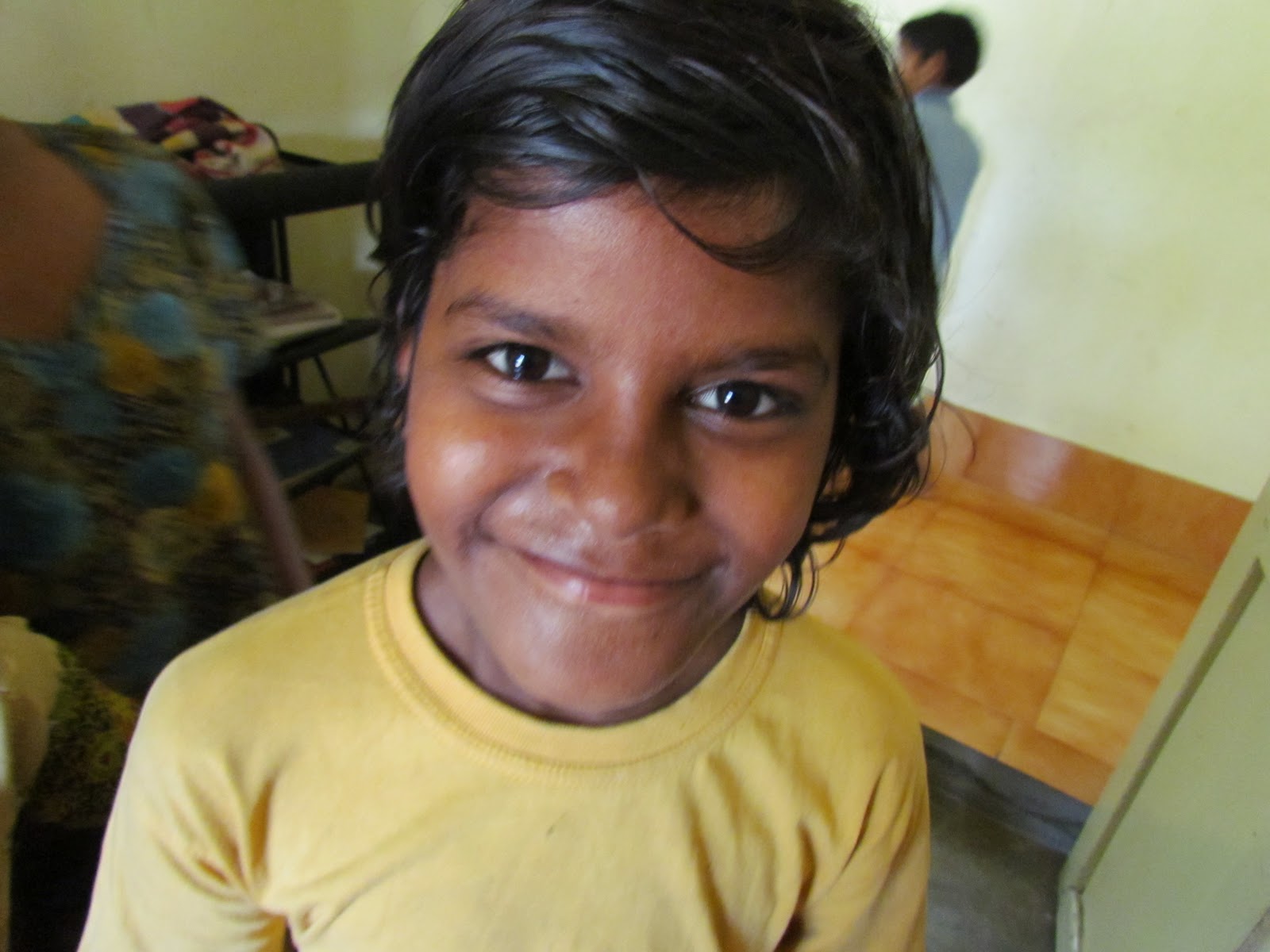
I arrived later than usual today because of some errands I had to finish before the afternoon siesta closed the shops. Tulsi was looking grim again. She perked up a little when we played our favorite games. When it was time to start saying goodbye, I passed out little drawings of hands with hearts in the palm, since it has become tradition for me to give all the kids high-fives at the end of class, or they shake my hand. I told them that I wanted them all to remember that in each handshake had been my love and when they needed more they could just give the picture a little tap. What I didn't say to the room, was that I'd come up with the idea for Tulsi, she was the one I knew would need to remember it the most. She was the one I needed to leave my love with the most.
I sat with the kids, Tulsi on my right, for a class photo and I could feel that Tulsi was on the edge. She was using all her strength not to collapse or dissolve. I put my hand on her back in reassurance. The picture was snapped and I looked at Tulsi and she was quietly crying. The other kids noticed. Nanda, the principal, noticed. He very kindly told the kids that Tulsi was really going to miss me. He told me that she had gone down to check the gate every few minutes this morning to see where I was. I put my arm around Tulsi and she put her head in my lap and cried. I cried, but only a little. I was surrounded by little hearts and we all decided to be gently stoic for Tulsi. But we all let our sadness be ok, too.

Later, after I'd said my final good-byes to Tulsi and her class, I walked by the classroom and discovered Tulsi outside, watching me say good-bye to some teachers. I went over and hugged her and whispered, "Kup Shundor. Kup Shundor." ("Very Beautiful. Very Beautiful") in Tulsi's ear. Tulsi, I know, was a soul on the verge of disintigration. Her heart was breaking. It was my job to hold her and to be compassionate and I was thankful that she had given me someone to hold, so that I, too, wouldn't disintegrate as my heart broke.
Today, in Seattle, there is a memorial for Mark Chamberlin, an actor that I worked with on three occasions. He died, suddenly, a week ago. As far as I know, it is still unclear why he passed away.
I had promised Mark that I would write a blog entry from India just for him. He wanted to know what the food was like here. I'd tried to write that entry many times over the last few months, but I kept rediscovering that although I love the food here, I don't know enough about it to feel like I can write anything intelligent, other than to say some food is spicier than other food. Or, its fun to always get to eat with my hands. Or, who knew vegetarian food could be so insanely delicious?
But now, I suppose I don't need to try. I did. For him. Last week, when I heard the news. I sat down and pushed myself to articulate the differences I'd noticed between food in the south and the food here in West Bengal. But it was a driveling little article. What I wanted to write about, for Mark, had nothing to do with food. It had everything to do with how this country is a lot like Mark. Both are, were, maddening at times. They are, were, even more quixotically warm and generous. When Mark chose to smile at something that I said, it tickled me much the way it does when a particularly hard to impress Indian person suddenly lights up with a smile.
I know that back home today so many people will be struggling with how to say goodbye to a very good man and, for many, an incredibly good friend. I wish that I could be there to add my own message of love and gratitude, especially for our last show together, A Christmas Carol, where he played Scrooge.

He was in such a joyful place, on stage and off. He was playful and kind and brought books in to read that he knew I would like. He hung out in the green room and brought beer for after the show. He'd also been excited for my trip. I will never forget the kind of far off look he got thinking about my impending journey, and the sideways smile that spread over his whole being, starting with his lips then going up to his eyes, then just energizing his entire handsome self.
I'd actually, I realize now, been excited to go home and to share stories with him during our next show together while we hung out in the green room. In fact, I'd decided a few days before he died, that I wouldn't write a blog about the food in India, but I'd tell him all about it when I saw him next. I thought it would be easier to convey the nuances of the various cuisines if I could add a little, "Well, the prawn curry in Kerala was, well, so MMMMMMMM." It had been a casual, fleeting thought, one I held lightly because I could never have imagined that I'd not be seeing him again.
There is still one more major good-bye left here in Santiniketan: Chandana. Last night we ate dinner and had a glass of wine while a storm front moved in shifting the air from hot, humid and still to very windy, cool and, eventually, torrentially rainy. Thunder and Lightening wracked the skies and knocked the fear of God into the electrical company who summarily turned off the juice, just as a precaution to avoid falling live wires and destructive power surges.
So, Chandana and I sat in the low light of a generator powered bulb and watched the drama of the heavens unfold till she suggested that if we really wanted to celebrate the coming storm season we'd go out and let the rain soak us to the bones. I put my hands out into the cold water and asked if that was enough to do the job, after all, a couple had been killed by a single bolt of lightening last week during an electrical storm in Santiniketan. She said, "Not at all. We have to look like heroines in some Bollywood movie if we want to do it right!"
So, I took the plunge and ran out into the pouring rain. Chandana followed and we danced around for a minute until we were drenched. Just as we made it back into the safety of her house, lightening flashed and thunder cracked right above where we'd been dancing.
At the end of the day, that's all we can really do, isn't it? Celebrate the storm with a good drenching dance. Take the lightening bolts of connection that light up our lives and the ensuing rattling thunder that rattles us out of our sometimes stupor and let it move us and shake us.
So many good-byes mean that there have been, and will be, so many good hello's, so much wakefulness, so much electricity, so much thunder, so many tear drops falling like so much rain.
Dr. Ganguly didn't really say good-bye, he said, "You will be back, you belong here. I don't think you can find peace where you are from. You are not like that. Only here you can find peace, I think." He might be right. Here I have been able to find peace within the crackling of my breaking-into-opening heart.
Tonight, I say good bye to Santiniketan and go to Darjeeling on the night train. Chandana will drop me off and make sure I am safely ensconced in the right berth. Tomorrow I will say hello to the Himalayas.
For now, I will leave you with a dance.


