Ancient Egyptians believed that upon death they would be asked two questions and their answers would determine whether they could continue their journey in the afterlife.  
The first question was, "Did you bring joy?"  
The second was, "Did you find joy?"

Showing posts with label Antaranga School. Show all posts

Tuesday, April 5, 2011

"Aschi" or "I'll Come Again!" ~ It's So Much Easier Than Saying Goodbye.

The last few days have held one goodbye after another.  First Chompa and her family came to tea, then the gender group ladies, then the evening school kids at Anturanga, and then, this morning, Dr. Ganguly, then the younger Anturanga kids.  Even the house dog here at Akanda, my Santiniketan home, followed me around all morning demanding farewell stomach rubs.

With each ending, a little piece of my heart has been torn off and left behind with each beautiful soul.  Chompa and Bishar, her son, and Gopal, her husband whose name I finally learned, got all dressed up and came for cake and tea.  While Chompa and I sat holding hands, she suddenly, took a beautiful necklace she was wearing off and put it over my head.  It was explained to me, through Chandana, that Chompa's brother had brought the string of glass and silver beads from Goya Gali, another holy city on the Ganges near to Varansi.  On the necklace was something called a narisha, or a stamp of the Goddess.  Which Goddess, I could never get.  Chompa was transferring the stamp to me, and with it, she said, her blessings for safe travels.  As if that wasn't enough, the necklace was bought near the site where Krishna fell in love with the married Radha.  So Chompa's blessing also carries with it, I was told, a purity of love, the wishes for a perfect love, unspoilt, heaven sent.

When the phone rang and it was abruptly time for Chompa to go, I hugged her close, as she has held me on our first goodbye a month ago.  This woman who had been so intrusive and jarring to my senses when we shared the same space six weeks ago, now feels like a guardian angel of some kind, sent to shield me and protect.  I was unprepared for the transformation.  Just as I was unprepared for Bishar to hug me.  As they walked away, it was as if the rug was being pulled too fast from under my feet.

Not that time makes saying goodbye any easier.  I had four hours to spend with my Chitra girls, the women of the gender group.  We worked hard, weaving the scenes they'd created of Chitra together with the stories from their own lives, stories that would soften the hardest hearts, true life tales of abandonment, abuse, strength, shame, and transformation.  For the last two weeks, I've been getting them to practice saying beautiful things about themselves, asking them to own their own strengths and uniqueness.  The first time they had to say something kind about themselves out loud they each giggled and covered their  mouth or mumbled it so lowly that I could barely hear them over the constant whir of the ceiling fan.  But yesterday, after telling the story of Chitra and their own harrowing stories, they finished the piece we've been creating by looking out at the audience (which was me and Chandana) and going one by one around the circle saying their name and what they feel is beautiful about themselves.

You must remember they speak in Bengali.  So even though, at some point, these strengths had been translated for me, in this first and maybe final rehearsal of the entire piece, I couldn't remember the exact translations.  What I could understand was that each woman spoke clearly and loudly and proudly. They each looked me in the eye.  They each owned their own beauty.  I could not have been more proud of them, or felt more blessed to witness their transformation.

Afterwards, I gave them each a little picture that I'd drawn with the phrase, in Bengali, "To me you are beautiful."  They gave me a scarf that I'd admired in their craft bin.  We all sat in a circle, quiet and teary.  Rupa, one of the women who had taken to the acting work particularly well, said, "We have had good teachers before and learned a lot from many people, but we've never had someone here like you who was really ours, who we knew loved us so much."

Darn it.  Now I can't type.  Hold on.....

Ok.  I can stop crying now.....

I told Rupa, and the rest, that she'd articulated exactly what I was feeling about all of them.

At the Antaranga evening school, where we had written poetry together, I showed them two youtube videos as a little going away gift.  The first was of elephants painting.  This blew their minds.  The second is one of my favorite viral videos of all time: Where the Hell is Matt?  In it this guy named Matt is filmed in various places around the world dancing a silly little dance, first by himself, then with people from the local areas.  I just thought since the kids and I had had such a great cultural exchange, it would be a lighthearted way of celebrating, plus I knew they'd like the geography lesson.  When the video started up I remembered that the first place Matt is found is in Mumbai, my first stop in India.  Half way through the video I remembered that the last place Matt dances is in Seattle.  So, as the kids watched, spell-bound, I started to sob quietly, overcome with the beauty of sharing the world with them, and the simple beautiful circle of starting in their world and ending in mine.

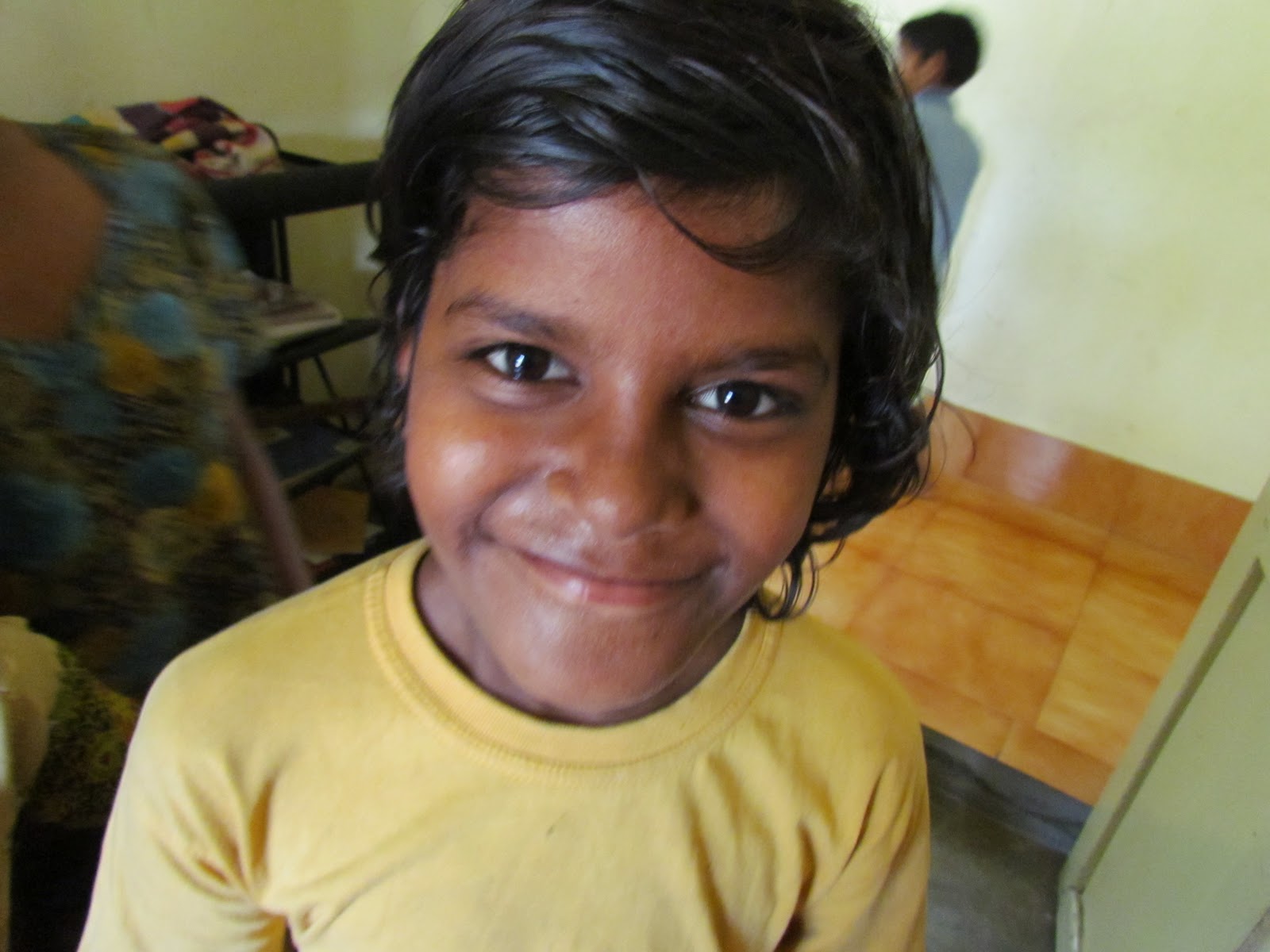
This morning I was dreading going saying goodbye to the little kids at Antaranga.  We'd worked the most together.  One child, in particular, I was very worried about.  Tulsi is a little girl who when I first showed up had an almost ugly, certainly angry looking expression glued on her face.  But after a few days of working with me she started to brighten up, after a week or so she was actually smiling.  Eventually, I noticed that she would be at the gate every day when I arrived.  She'd take my bag and carry it upstairs for me and put it next to, or under, her own book bag.  When we would circle up, she would take my hand and squeeze it.  I would squeeze her's back.  I knew it was going to be hard for her to have me go.


I arrived later than usual today because of some errands I had to finish before the afternoon siesta closed the shops.  Tulsi was looking grim again.  She perked up a little when we played our favorite games.  When it was time to start saying goodbye, I passed out little drawings of hands with hearts in the palm, since it has become tradition for me to give all the kids high-fives at the end of class, or they shake my hand.  I told them that I wanted them all to remember that in each handshake had been my love and when they needed more they could just give the picture a little tap.  What I didn't say to the room, was that I'd come up with the idea for Tulsi, she was the one I knew would need to remember it the most.  She was the one I needed to leave my love with the most.

I sat with the kids, Tulsi on my right, for a class photo and I could feel that Tulsi was on the edge.  She was using all her strength not to collapse or dissolve.  I  put my hand on her back in reassurance.  The picture was snapped and I looked at Tulsi and she was quietly crying.  The other kids noticed.  Nanda, the principal, noticed.  He very kindly told the kids that Tulsi was really going to miss me.  He told me that she had gone down to check the gate every few minutes this morning to see where I was.  I put my arm around Tulsi and she put her head in my lap and cried.  I cried, but only a little.  I was surrounded by little hearts and we all decided to be gently stoic for Tulsi.  But we all let our sadness be ok, too.


Later, after I'd said my final good-byes to Tulsi and her class, I walked by the classroom and discovered Tulsi outside, watching me say good-bye to some teachers.  I went over and hugged her and whispered, "Kup Shundor. Kup Shundor."  ("Very Beautiful.  Very Beautiful") in Tulsi's ear.  Tulsi, I know, was a soul on the verge of disintigration.  Her heart was breaking.  It was my job to hold her and to be compassionate and I was thankful that she had given me someone to hold, so that I, too, wouldn't disintegrate as my heart broke.

Today, in Seattle, there is a memorial for Mark Chamberlin, an actor that I worked with on three occasions.  He died, suddenly, a week ago.  As far as I know, it is still unclear why he passed away.

I had promised Mark that I would write a blog entry from India just for him.  He wanted to know what the food was like here.  I'd tried to write that entry many times over the last few months, but I kept rediscovering that although I love the food here, I don't know enough about it to feel like I can write anything intelligent, other than to say some food is spicier than other food.  Or, its fun to always get to eat with my hands. Or, who knew vegetarian food could be so insanely delicious?

But now, I suppose I don't need to try.  I did.  For him.  Last week, when I heard the news.  I sat down and pushed myself to articulate the differences I'd noticed between food in the south and the food here in West Bengal.  But it was a driveling little article.  What I wanted to write about, for Mark, had nothing to do with food.  It had everything to do with how this country is a lot like Mark.  Both are, were, maddening at times.  They are, were, even more quixotically warm and generous.  When Mark chose to smile at something that I said, it tickled me much the way it does when a particularly hard to impress Indian person suddenly lights up with a smile.

I know that back home today so many people will be struggling with how to say goodbye to a very good man and, for many, an incredibly good friend.  I wish that I could be there to add my own message of love and gratitude, especially for our last show together, A Christmas Carol, where he played Scrooge.


He was in such a joyful place, on stage and off.  He was playful and kind and brought books in to read that he knew I would like.  He hung out in the green room and brought beer for after the show.  He'd also been excited for my trip.  I will never forget the kind of far off look he got thinking about my impending journey, and the sideways smile that spread over his whole being, starting with his lips then going up to his eyes, then just energizing his entire handsome self.

I'd actually, I realize now, been excited to go home and to share stories with him during our next show together while we hung out in the green room.  In fact, I'd decided a few days before he died, that I wouldn't write a blog about the food in India, but I'd tell him all about it when I saw him next.  I thought it would be easier to convey the nuances of the various cuisines if I could add a little, "Well, the prawn curry in Kerala was, well, so MMMMMMMM."  It had been a casual, fleeting thought, one I held lightly because I could never have imagined that I'd not be seeing him again.

There is still one more major good-bye left here in Santiniketan: Chandana.  Last night we ate dinner and had a glass of wine while a storm front moved in shifting the air from hot, humid and still to very windy, cool and, eventually, torrentially rainy.  Thunder and Lightening wracked the skies and knocked the fear of God into the electrical company who summarily turned off the juice, just as a precaution to avoid falling live wires and destructive power surges.

So, Chandana and I sat in the low light of a generator powered bulb and watched the drama of the heavens unfold till she suggested that if we really wanted to celebrate the coming storm season we'd go out and let the rain soak us to the bones.  I put my hands out into the cold water and asked if that was enough to do the job, after all, a couple had been killed by a single bolt of lightening last week during an electrical storm in Santiniketan.  She said, "Not at all.  We have to look like heroines in some Bollywood movie if we want to do it right!"

So, I took the plunge and ran out into the pouring rain.  Chandana followed and we danced around for a minute until we were drenched.  Just as we made it back into the safety of her house, lightening flashed and thunder cracked right above where we'd been dancing.

At the end of the day, that's all we can really do, isn't it?  Celebrate the storm with a good drenching dance.  Take the lightening bolts of connection that light up our lives and the ensuing rattling thunder that rattles us out of our sometimes stupor and let it move us and shake us.

So many good-byes mean that there have been, and will be, so many good hello's, so much wakefulness, so much electricity, so much thunder, so many tear drops falling like so much rain.

Dr. Ganguly didn't really say good-bye, he said, "You will be back, you belong here.  I don't think you can find peace where you are from.  You are not like that.  Only here you can find peace, I think."  He might be right.  Here I have been able to find peace within the crackling of my breaking-into-opening heart.

Tonight, I say good bye to Santiniketan and go to Darjeeling on the night train.  Chandana will drop me off and make sure I am safely ensconced in the right berth.  Tomorrow I will say hello to the Himalayas.

For now, I will leave you with a dance.


Monday, March 28, 2011

Soul Food

Somedays it's simply hard to get out of a funk.  Despite the fact that today was cool, thanks to the extended thunderstorms that swept through the area late into last night, I couldn't shake a certain sadness for the life of me.

Actually, I think it was the weather that set me off.

I know, I know....geez, what makes this girl happy?  She gets edgy and cranky in the hot weather, she is sad in cool weather.....

Today was perfect weather.  It was Seattle in August weather.  It was gentle and just the right amount of warm.  It made me slightly homesick.  But mostly, it made me feel the conflict I have about leaving Santiniketan (and eventually India) even more acutely.

Traveling is soul food for me.  I get that.  I learn the most and feel most alive when I am out in the wide world soaking in new adventures.  But, I am also a nester.  I need a home-base, a place to to return to.  So, even though I crave travel and getting out and exploring the planet and different cultures, I've always known and felt drawn to eventually return to my cozy spot in Seattle.

This trip is different.  For the first time I don't know what it is that I am going home to.

Wait.  Wait.  Don't get me wrong....my house, my friends, my family, ALL are just as rich in soul nutrients as traveling and I miss so many incredible people that I cannot wait to see in just over a month.

It's just that, today anyway, the reality that at 41 I don't have a family of my own, a partner waiting for me, a career that is sitting patiently but anxiously counting the days till I come home, has really hit me in the gut.

Here, in India, in this town I'd never even heard of 6 weeks ago, in a part of the country I'd vowed not to go near, I can see a need, a purpose for being here.  There are people, like Chandana, that I could work with to help other people live better, healthier lives.

But could I really leave the safety and security of my beautiful house and my network of friends and family so far away?  Could I abandon the opportunity to act in Seattle on a more regular basis with a community that I respect and look forward to playing with whenever the chances arrive?  I have, after all, spent almost 15 years paving that particular road.  Could I handle the upheaval that moving to the other side of the globe would entail?  Would I want to, even if I could?

These questions started to consume me today, so I did the only sensible thing: I took a nap.  With the sense of an impending spiral into depression still looming when I awoke, I decided to go for a bike ride.  Once on the bike, I made up my mind to cross the safety barrier of the Santiniketan wall  and to go into the village just on the other side.

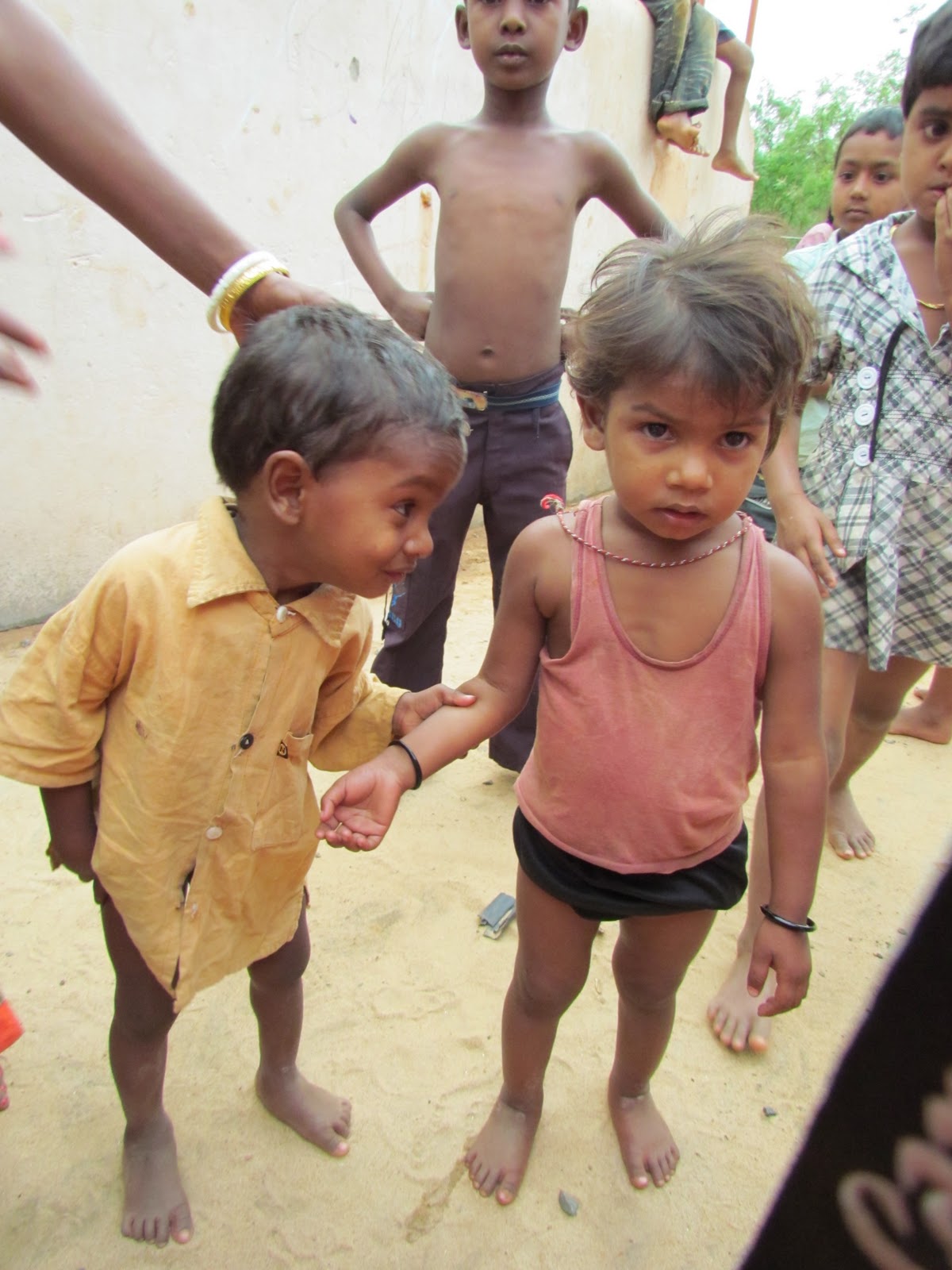
Here I was almost consumed by something else entirely: joy.  Everyone wanted to say hello.  I even ran into a few students of Antaranga School who live over there.  I pulled the camera out and was virtually mobbed.


People started coming out of the woodwork and fairly demanding that I take their pictures, though you'd think I'd forced them to stand still and pose based on the expression they offered to the camera.


Parents insisted that I take their children's photos.  Things were happening so fast and I was surrounded by so many people, hands everywhere...on me...on my camera...in and out of the frame...that looking at the pictures I am struck by how many other interesting things ALMOST got captured on the camera, like the kid with his hands on his hips in this one.


I wish I knew the Bengali word for "goofball."


And, below, is my all time favorite kid portrait, ever.  I take no credit.  Like I said, things were happing so fast, people were in and out of my field of vision in a flash.  This was completely the luck of the draw.


It was also pure chance that the last house on the village road turned out to belong to one of my favorite kids from the evening school at Antaranga and he was home and his family invited me onto the porch for tea. They gave me the seat of honor, which is to say, they gave me the only chair and the extended family and friends from all around came and sat on a mat on the floor.  It was just sunset, so too dark to take pictures.  So, just imagine a very small space with 4 or 5 women with 6 or seven toddlers, the young man from the school, and in the only other chair that appeared out of nowhere, a woman who had to be 200 years old if she was a day.  Ok, she only looked it, but I wouldn't be surprised.

Just inside the door to their one room house I could see an elevated bed covered with clothes and below the bed a fresh crop of potatoes were being stored.  On the edge of the porch a woman lit a fire using dried leaves on the concrete floor and made tea which she thankfully got good and boiling before pouring it into cups.  I was offered the only serving with powdered milk and a large plate with more than my share of crackers.

Conversation was initially aimed in my direction.  Questions about wether I had children and if I was married came my way.  When they found out the answer to both inquiries was "No," they all gasped and decided that I would be a very good wife and mother.  A high compliment coming from that group.  Eventually, the women turned to village gossip or news and I was left to play with the kids, both human and goat, that ran around my feet.

At one point, my Antaranga student's grandmother, who was one of the most striking and elegant women I've ever seen with her long flowy grey hair and lithe limbs and natural ease in a sari, noticed my arm tattoos.  In fact, she was the second or third lady that day who had grabbed my arms and made pleased noises to find them tattooed.  It's a tribal custom here for the ladies to tattoo their forearms.  I think finding my arms to be tattooed helped me to be less foreign.

The tattoos are of identical design, the one on the left arm says, in french, "I am the gift", the one on the right says, again in french, "You are the gift."  I was struck by the admiration of the tattoos coming today of all days, because sitting on the porch of that tiny village hut, I no longer worried about my aimless feeling life, my singleness, my childlessness.  These women and children, this afternoon, was....IS.....ARE....the gift(s).

As much as having tattoos on my forearms is a crazy thing to do as an actress, I really love them, because even with the messages permanently written on my body, in plain sight, I forget them sometimes.  When I do, some angel leans over and grabs my arm and points and reminds me why they are there.

Friday, March 25, 2011

Simple Pleasures

Well, the rain did come yesterday.  Somewhere.  We only got a few drops in Santiniketan though, but the storm did its job without local precipitation and lowered the temperatures so dramatically that I was able to sit last night for several hours without turning on the fan.  Even today, it remained cool enough to take a nice nap and then a sunset bike ride.

I have been hard at work making a website for the homestay I'm living in and another for Ahimsa, the NGO that Chandana works for.  I've been teaching kids how to do stage slaps and getting other kids to write a book of poetry.  Finally, I've ironed out some of my remaining travel plans.  I'll go up to Darjeeling for a week on April 4th, where the air at the moment is a little too cool at 37 degrees F.  After that, I will come down from the mountains to the Ganges and the holy city of Varanasi.  I've still got two weeks at the end of my trip to pin down, but it  looks like I might be going to Jaipur in Rajasthan after all.

Shifting my focus, even in the planning stages, to leaving Santiniketan has left me feeling unfocused.  I've tried to write several blog posts on things like the kids at Antaranga or the women in the Chitra group who all have stories worthy of their own best-selling memoirs.  I am so much IN it here now, in the world of this little town, into a routine, nestled into my house and alone time when need be, socializing and checking in with Chandana about work and life and gossip when the mood strikes that I'm finding it nigh on impossible to step out long enough to write from here.

I've thought once or twice over the last few days that I could easily be back in Seattle I feel so acclimated, so used to being here.  But now, in buying train and plane tickets for the next legs of my Indian adventure, I am reminded that I am only a visitor to this little town on temporary leave from my "normal" life.

It is a temptation to start to disengage and pull away from my new friends so the actual parting will be less painful, but, so far, I've managed to curb that impulse.

But the emotions are getting a bit jammed up and, like I said, I haven't been able to write.  It seems like all my thoughts and feelings and stories are now crowded in a small room, such a confined space that I can't make out any individual thread clearly enough to untangle it and put it down in clear, bright words.  It's like if every story I want to write for you were a person, they would be packed like commuters on a Mumbai train, pinned against one another, packed like the proverbial sardines, immovable.

Maybe I have to imagine all those stories at a train stop and wonder which one would get off now and which ones are still waiting to get off further down the line.

Hmmm.... Ok.

What would the first stop be called?  Let's try "Simple Pleasures."

The image that steps out of the train first is of two little girls, each 13 but small for their age who go to the night school at Antaranga.


I don't know their names.  I should.  They have told me.  But Bengali names and I have a little bit of difficulty understanding each other.  Plus, I don't work with the night school kids more than a few evenings a week.  We have been making a book of poetry.  I sent the students out to observe their lives and then asked them to come in and write short pieces in Bengali about something that made them happy.  Actually, I asked them to write about something that affected them, moved them in some way, and they all chose to things that made them happy.  Then we translated the poems into English, after which they wrote the two versions of their poem side by side and illustrated them.  As several kids were absent after the revelry of Holi, this process has been drawn out and students have been finishing in stages.

Last night I waited for the last 4 kids to translate and illustrate, which left me pretty much hanging out with the other 15 kids while they did any homework from their day school, the government school, where class sizes of a 100 students or more make it impossible for anyone to get individual attention.   As I sat against the wall on the floor, one of the 13 year old girls nudged her way to sitting on my right side, the other girl scooted in to sit on my left.  The girl on the right plopped her English book on my lap and started reading from it.  It was a lesson in the Past Tense of verbs.  The girl on my left leaned in and started to read out loud with the girl on my right who was sitting now with her elbow resting on my leg.  As they continued to reach deep into their brains to put sound to what they were seeing on the type-written page, their little heads leaned in and the three of us were almost forehead to forehead to forehead.  I would correct them, if needed, and they would try again.  It was the simplest of teaching moments, and one of my favorite ever.

When they were tired of reading, the two girls took to trying on my rings and generally being goofy and trying to tickle me.  The boys who were half-way working on the other side of the room started posing and asking for me to take "one picture please."


From an adjacent classroom, a gal of 14 or 15 was basically playing peek-a-boo with me, going so far as to sometimes get up and run in to my room and then run back out.

One of the two older girls who was still illustrating her poem, paused to tell me all nine of her names, this included her English name, Anita, and her nickname, Honey.  I loved that this girl, who I must admit is one of my favorites, had the same nickname as my big sister.  The Indian Honey caught my eye right off when Eva was here doing her art workshop.  Honey is a girl just on the line of becoming a woman, with a serious maturity that hints at great sadness which makes me love her.  I sense that she is fighting to become herself in a place that doesn't make much room for girls to own their power and their independence.  I have tried, as best I can without making it obvious to everyone else that she is one of my favorites, to instill in her my belief that she is someone special.


It's really unfair to say that Honey is one of my favorites, because when my mind wanders over all the faces from the night school at Antaranga, I feel such love for each one.  It's a group full of character and light.  And last night, as I sat there on the dirty and dusty floor, mosquitoes buzzing, I couldn't imagine any place on earth that was more wonderful.

There are so many simple pleasures here in Santiniketan.

The way rickshaw drivers sit in their rickshaws waiting for customers never ceases to please me.  They do it in such a way that it feels like they arranged themselves deliberately in the most beautiful and artistic way possible.


The way ticky tiks, or geckos, are constantly flitting across the walls tickles me daily.  Once I learned that geckos were called ticky tiks in Bengali they became even more fun.

The absolutely brilliant nimbu panis that Munglie, the cook here, makes for me every day.  It's a special lime juice that is calibrated to be just the right amount of salty and sweet as to be thirst quenching and utterly delicious all at the same time.

Seeing Saris drying on the lawn, simply stretched out on the grass.  It's delightfully colorful and completely practical.

The fact that tiny little food shacks that still operate much as they must have 100 years ago can be entirely covered in chalk drawn murals such as this....


....makes me want to literally jump for joy.

I could go on and on.  As my days here dwindle, I'm going to have to be diligent about soaking all these pleasures in without holding onto them too tightly.  Maybe finding out what other stops my writing train needs to stop at to let some of these pent up stories out will help.

I'll think on that while I climb into my mosquito-net tented bed, another simple pleasure that affords me a moment everyday of indulging in the sense of adventure that comes from going to sleep in a place that requires a mosquito net to cover the bed.

Thursday, March 24, 2011

Rain Dance

The sky over Santiniketan has turned grey and a yellow heaviness has filled the yard outside my window.  One minute a slight breeze comes through, the next I feel the humidity spike and I start to sweat, then relief descends again.

Thunder has just begun to rumble and it seems almost certain now that a downpour is imminent.

This morning at Antaranga I made machines with my class three kids.  Using their imaginations and their bodies, this group of 7 year olds first made a bicycle, working out all the intricate parts that come together to make the whole.

Next, I took a leap and wondered if they could make a machine to make rain, blessed rain, rain that my heat soaked body craves with each additional degree on the thermometer.  I asked the students what parts we would need for such a contraption.   One girl cottoned onto the idea right away and raised her hand and volunteered to be the water.  Next, two girls decided to be the bowl that held the water,  this was followed by a gal who was the wood that made the fire that heated the water.  Of course,  vapor made by the heated water followed,  then two boys stood on a chair and started booming like thunder-clouds and, finally, the last two girls stood up and magically transformed into rain dancing on the ground.

I don't want to get ahead of myself here and I don't take any credit, but if it starts to rain today, then tomorrow I'm asking those genies at Antaranga to become a machine that makes cool breezes, and peace, and an anti-nuclear meltdown reactor, and vast green fields of rice and mustard seed and whatever else the villagers around here need to build robust and healthy lives, and, just for fun, a transporter so I can pop over and see my Mom and then get a margarita with all my friends in Seattle, then see my niece in NYC, then come back here and finish my trip.

The breezes are kicking up.

Lightening is striking.

Thunder is rolling.

What is going to happen?  What is going to happen?

Wednesday, March 16, 2011

How It Strikes Me

I am living in India.  I am not on vacation anymore, or on hiatus from my "real" life.  I have taken up residence in India.  India has taken up residence in me.

Cows in the road, dogs sleeping lazily wherever they please, sparrows the size of doves, none of these surprise me anymore.  They are a part of my life.  I get up early in the morning, just after the sun.  Not because the dogs who howl all night long have kept me up, they haven't.  I am immune to their incessant bays.  It is the birds calling and chattering away that get through to my slumbering mind.  I go into my little kitchen which has been newly equipped with a kerosene burner and a toaster so that I can begin my mornings slowly, solitarily.  I open my door to the outside world and the second gated door that keeps me locked safely inside while I sleep.  I set up a low slung chair at the top of my steps and sit and sip coffee and watch the birds do their morning dance.  Today I fed them scraps of my toast to bring them closer to me on the ground.

I roll up the mosquito nets that cover the windows, I pull back the curtains, I open the shutters if they have been caught in the wind and closed a little in the night.

I check my email.  I get frustrated with the infuriating speed of the Internet.  I should have faster speeds but the Internet guy has royally slacked off and we've been playing phone tag for over two weeks.  Chandana has been the heavy and gone to his office to intimidate him into action, but that's only gotten him so far.  Yesterday I decided to call him every 10 minutes to see if that would get through to him.  I felt like the boy in About a Boy buzzing on Hugh Grant's door: buzz, buzz, buzz, buzz, buzz, buzz, buzz...... Unlike the boy, I am still waiting for a reply.

Around nine I get dressed and load up my bike and head off to work.  Monday through Friday I teach at Antaranga.  I've started doing a little show with the 8 and 9 year olds.  They are writing it, based on an Indian folk tale that they told me.  On Sunday's I work with my Chitra girls.  In both cases, I am amazed each day how much we are able to understand each other despite the fact that we do not really speak each other's language.

At Antaranga my biggest challenge is that one of the women teachers doesn't speak English and yet wants to tell the kids what to do.  She can't know what they are to do, because she hasn't understood me.  She bosses them. Sometimes she pulls them forcibly where she thinks they are meant to be.  As a visiting teacher, part of my purpose is to give the regular teachers another method of working from which to draw from.  She doesn't understand my method of working.  I am comfortable with the learning curve.  I know that the kids may not understand what we are doing perfectly today.  But tomorrow they will have absorbed it somehow and they will get it more right, and the day after that, even more right.  That is if they are given space to fail and to find their own way of understanding.

I've discovered that "imagination" is not a word that translates easily into Bengali.  Imagination is rampant in these parts, but when I use the word, people look at me as if I've spoken martian.  This makes teaching how to use the imagination very difficult, but fun.  I've had to go about it slyly.   I've had to trick both the students and fellow teachers into using their imagination without asking them to use it.  It wonderful for my teaching skills.  I'm having to relearn how to teach everything I thought I knew already how to teach.

At 11 or so I ride to the shops or back home where I write or work on the website I'm starting for Chandana's Ahimsa programs, which is where my Chitra group gets it's funding.  I usually eat lunch made by the ladies who work in my house, I nap if it is hot outside....and it's always hot.  In the evening I may go back to Antaranga for the evening classes, or write some more, or read, or visit with Chandana.  There are nights coming up where concerts have been arranged, visits to villages, I'm not sure what else.  People are gently anxious to make sure that I am entertained.  Last night I kept to myself and went to a cafe for dinner and started to read a new book by Vikram Seth, An Equal Music, that made me weep at almost every page.

Santiniketan is easy to live in, once you accept that the well may literally run dry in the night and therefore there is no way to wash in the morning.  The electricity, too, might go at any minute.  Shopping for groceries is something you can only do between 10 and one and then again between 5:30 and 9, except on Tuesdays when you can only go in the morning and Wednesday and Sundays when you can't shop at all.

I am beginning to get a feel for the strange interplay in India between what is locked away and what is always kept exposed.  It is a common sight to see men peeing in the street.  I've even had cab drivers stop, get out of the car, walk to the back of the car and unzip to pee, then they get casually back in the car and continue on.  Indian's can sleep anywhere too, especially the men, sidewalks, fences, the edge of the railway track, the street.

When Nicole and I were waiting for the train to leave Howrah station we watched a young man of 16 or so, use the spout in the middle of the next set of tracks to take a bath and brush his teeth.  Hundreds of people were around him, either on the platform opposite or the train right next to him.  He took off all his clothes, except his underwear, washed with soap and water, used deodorant that he'd kept in a plastic bag along with his aftershave which he put on next, then he opened up a brand new undershirt, put on his pants and a belt 4 times too big, and a cleanly pressed shirt.  He combed his hair, brushed his teeth and looked a million bucks.  You'd never know he lived on platform 9 of Howrah Station, where he also, it turns out, went back to work selling fruit when his morning bath was done.

Yet all the windows in India have grates or bars, usually in art deco designs, but bars none-the-less.  All the doors have locks on both sides to keep some people in and other people out.  I haven't met a cabinet without a lock, except in the Bengal Club, originally an English domain, where presumably it is safe to leave your belongings out.  It's as if things are meant to be secured, fastened to a place, hidden away, but the most intimate daily actions of humans are lived under the stares of everyone around them.

In one or two room houses where multiple generations live and sleep together, even sex becomes a sanctioned public act.  I am thankful that I haven't moved into that part of India.

Much to the confoundment of the people who look after me, I have not abandoned my western sense of modesty, or of personal space, which is one of the most foreign things about me here, where no one gets the concept of keeping to oneself.  But I'm loosening up in that regard.  Today, as I ate my breakfast, Minou came in to take the mosquito net off the bed, to sweep, to generally be in my space, helping me.  I realized after a few minutes that it has become natural to have her here, to have her gently clearing my domain while I sit in my nightgown, hair dishevelled, eating my toast.  I don't bristle at the intrusion,  I don't even feel guilty that she is on the floor drawing the broom under my feet.  I have accepted that, for her, that is the order of things and to try and change that order would be disrespectful.

I don't speak Bengali yet.  That's what gives me away, not my skin, or my western-Indian fusion of dressing.  However, I'm learning more subtle Indian vocabularies.  First, there are the various head bobs where the chin wobbles at slightly different angles to indicate different things: "Yes", "Maybe", "I want you to think I'm saying yes but the answer is really no".  Then there is the the liberal use of "hunh," which indicates to another person that you are listening and that you have understood.

"I would like you to go...."

"Hunh...."

"...to the store..."

"Hunh, hunh..."

"....and get some lentils."

"Hunh, hunh, hunh.'

"Not the big red lentils..."

"Hunh..."

"...but the small yellow ones."

"HUNH...!!! Hunh.  Atcha.  Tik Atche." (That last part means, "Ok.   All right".)

I've been sitting in the room on countless occasions when someone I am talking to will get a call and all I hear from my point of view is, "Hunh..........  Hunh, hunh......hunh, hunh, hunh......hunnnnh....hunh....hunh....hunh.  Atcha Atcha.  Tik atche."

Do not be surprised when I come back to the States and you hear me saying, "Hunh.  Hunh."  You have been warned.

I started to write, just then, "when I come back HOME," but it didn't stick.  It didn't stick because I am home, at least for now.  Chandana asked me the other day why it had taken me so long to get to India when it obviously suits me so well.  I told her because it wasn't the right time.  But now it is.  Now I am home.


I went out to one of the Santal villages today for a festival to celebrate all the villages of the area and what they had accomplished in the last year.  There were games where women had to run the farthest carrying a jug full of water on their heads and bicycle races where the aim was to go the SLOWEST without falling over.  There was a dancing and drumming contest where groups from each of the Santal villages competed, a ferris wheel, ice cream vendors.  All this was set out in the middle of rice paddies and thatched roof houses with dung patties drying on the walls.

The woman who lives upstairs from me, Jeanne, took me out to the fair because Chandana is out of town.  As our car was taking us back home at dusk, a mist was forming over the crimson rice fields, the palm trees were silhouetted against a dark pink and blue sky.  Streams of boys on bikes who were heading to where we were driving away from, appeared and disappeared again in our headlights.  Oxen relaxed on the sides of the road, leaning against houses painted pale blue and red, after long days pulling bullock carts.  There was nothing about the scenes floating by outside the window of the Ambassador that should have made sense to me and yet it was completely normal, completely right and I said to Jeanne, "I don't think I've ever seen anything more beautiful than these villages around Santiniketan."

I haven't.  Not even my beloved Paris, or the beach in Mexico, or the Olympics rising over the Puget Sound can hold a candle to these tiny backwater towns where so many people live a simple life getting married, having babies, re-learning how to be organic farmers, weaving, holding hands, serving tea to strangers.  This place is no idyll, there's poverty, drought, and child-brides, but in a co-operative fashion the native villagers, Indians from the surrounding areas and foreigners who have taken an interest have slowly, over the last 20 years, been bringing the villages not so much into the modern age, but into balance by establishing  schools, nutritional programs, even a small local hospital.   With help from people like Chandanda and groups like Ahimsa, these villages are becoming stronger without losing their souls, their individuality, their identities.  And because of it, they have a glow about them, a sense of light unlike any I've encountered anywhere else on the planet.


I don't know what any of this means.  I haven't a clue.  In terms of me, I mean.  I just know that today this is how it strikes me.  I am living in India and I am at home, all at the same time.

Saturday, February 19, 2011

Peaceful, Easy Feeling

When Eva suggested that I come to Santiniketan, she said that it’s a very different experience to be living and working in India rather than being a tourist, even if you are only working for a few weeks.


I haven’t really been working all that much in the last week. But I have a purpose, a job that is making itself up as I go along. In addition to going to the village to meet the women who I’ll be creating a short Tagore piece with, I helped Eva do two art workshops at the Antaranga School.

As the chief fundraiser for the Antaranga School, Eva has planned an exhibition in Switzerland of artwork created by the students. On Friday morning we worked with 20 of the younger kids. I started off the class with an acting excersise designed to get the kids thinking about different environments. The students were divided into 5 groups; each team was assigned a place: The Sea, Jungle, Desert, Outer Space, The Circus. Members of the “Sea” group came up one at a time and created a frozen picture of the Ocean by announcing what they wanted to be and striking a pose of that thing: wave, fish, whale, shark. Once they were in place, I had the non-sea kids count to three, at which time our “ocean” would come to life. It’s a simple, but very effective way to get kids moving creatively.

After they got their imaginations going, each team used thick finger paint to create large paintings of their environment. The paintings were great; but ended up being more specific than Eva had anticipated. She had hoped the students might work a little more abstractly so that in the second half of the workshop, which takes place on Monday, the young artists could be freshly inspired by the backdrops to imagine a new environment into which they could introduce the appropriate animals. We needed more paintings.

I thought quickly. I had all the kids gather the paint in the center of the room, then I had us all sit in a clump around the paint. I told the adults to put paper all around our circle. With Nandu translating into Bengali, I told the kids to listen to my voice and to move their hands in the air to the music I would make. If the music was fast, they were to move their hands fast. If the music was very melodic, the fingers would become softer, more flowy. The kids were really listening and adjusting accordingly, so I made the next leap.

I said, “Ok, now I want you to choose one color. Dip your hands in that color and go to a piece of paper. Don’t touch the paper till you hear my voice, then paint to the sound of my voice.” I hoped all that would get through in Bengali.

The kids coated their hands, got to their paper. I started singing, slowly. The kids started pounding the paper indiscriminately with paint. I said, “Stop! Listen to my voice.” I tried again with a very rhythmic sound. The kids just pounded at their own pace again. I said, “Stop. Nandu, tell them to watch me.” I demonstrated.

The kids got poised to paint again. I started to sing.

You could feel the coin drop. Suddenly the students were really listening and painting to the sound of my voice. Several times I told them to freeze and I would change the feel of the music and they would change their tempo, their hands would get softer or harder accordingly. It was really thrilling. I asked another volunteer, Kristin’s daughter, Michaela to sing a song. She started into Castle on a Cloud. The students basically danced with their hands on their canvases. When we were done we had a room full of backdrops for Monday’s class, a huge mess of paint on the floor, and I had a green face.

Part of what made both activities so fun was that the teachers at Antaranga were so tickled by them. The teachers at Seattle Children’s Theatre have been using the first “environment” game for years, but it was totally new here in India. I was so happy to be opening up doors in thinking for both the young kids and their mentors; they all repayed me a million-fold with wide-open faces and hearts. Because of their trust, I felt so free and creative that that second exercise just fell out of my mind. I wasn’t stressed about whether it would work, or about proving myself to anyone. I followed my instinct and everyone went with me. Of course it helped that Eva had thought so long and hard about what she wanted out of the workshop and Nandu and the other teachers were so good at their jobs. I certainly wasn’t the only one working. It was a true collaborative effort, with each soul in the room doing their part, teachers and students alike.

The evening workshop with the older kids was very much Eva’s baby. She did a stellar job. Barbara and I facilitated along with Nandu and two other teachers. I got to be the hard-nosed teacher who ran around saying, “10 more minutes!” “Five more minutes!” “Two more minutes!”

I learned how to say that last one in Bengali. It’s really hard: Du minute!

When time was up, I learned how to say, “Cess!” (Stop!) I would go to one group and say, “Cess!” then dance to the next group singing, “I’m learning Bengali-eeee!!!” Then say in my mock hard-ass voice, “CESS!” to the next group.

Today, Saturday, the school is closed so Eva, Barbara, and I had the day off. I needed to get my sandals fixed, so I took a rickshaw to the cobblers. The two shoe fixing guys work on a platform at the base of a banyon tree on the main Santinikitan drag. I sat and watched while the younger of the two guys went set about matching the purple leather of my sandel, reglueing, sewing, and pounding my shoe back to life. The older guy then cleaned both shoes. The whole process took 15 minutes and cost 50 cents.

This afternoon Eva took Barbara and I to the Saturday Hut, a market for artists to sell their wares that is held in a large field on the outskirts of town. I almost didn’t go because I was super tired after a two hour bike ride yesterday afternoon and I didn’t really feel up to another ride out of town.

I’m glad I went.

The Saturday Hut was a dusty affair, accompanied by the music of several musicians playing traditional Bengali drums and stringed instruments called Ektas. The arts and crafts were pretty fantastic, but not as amazing as the faces of the folks who made them. Soul, that’s what they all had, depth and soul. The people who were buying the goods also seemed like pretty neat folks. I wanted to talk to everyone, to know their stories. But I contented myself with basking in the whole atmosphere of the Hut which was a thick soup of heat, dust, and melody with an undercurrent of creative energy that seemed to swell from the earth itself.


I think I’m beginning to get a handle on that enigmatic shift that I noticed when I came North. In the Kerala, the people lived ON the Planet. In Santiniketan, the people feel OF the planet.

Who knows, maybe it’s just that I’m more grounded.

When Eva, Barbara and I cycled home from the market, I stopped on the dirt road to take a picture while the two German ladies went on ahead. It was dusk and the road was crowded with rickshaws, bikes, motorbikes, trucks and cars headed home from the Hut. I clicked my photo then started off again on my own. A few feet away a package fell out of the basket on my bike. I had to jump off the cycle and run to get the package before it was run over by a group of guys on motorbikes. I got back on my bike and started off again. A few feet later my scarf got caught in the wheel of my bike. I stopped again. When I took off, I only made it a yard or two before a truck ran me off the road. Then, I got back onto the road only to be caught behind a mini-van spewing exhaust. To cap it all off, after I finally got up some speed I was bumped off the road again and my shoe fell off! It was like I Love Lucy, but not quite as funny.

All through this crazy ride, I just kept smiling…really smiling. As frustrating as it was trying to get down the road, there was nowhere else I wanted to be. My body was sore and tired from all the cycling, my lungs were filled with dirt and fumes. On top of all that, men were staring at me in a way that would have unnerved me just weeks ago, but now it doesn’t bother me in the least. After every setback and through all the attention, I just kept getting back on my bike, my heart full of gladness, to continue the journey home.

When I was able to just ride for a bit, I wondered why it was that I was feeling so different, so content, peaceful and easy about all the obstacles that I was encountering. “Is it the magic of Santiniketin? Is Santiniketin even that magical? Am I just acclimated, finally, to India? Is it the yoga, the exersice? Is it going to work and being of use? Is it all of the above?”

Ultimately, I don’t suppose the reason matters. But I also don’t imagine that I’m going to stop trying to figure it out.

(More pictures will be added later to all the Santineketan posts, the internet is extremely slow in these parts....)